

· AFX Research
Corrective Deeds: Fixing an Error in a Recorded Deed
A misspelled name is not the same problem as a wrong lot number. Here is how corrective deeds, scrivener's affidavits, and re-recorded instruments show up in a title search — and when paper isn't enough.
Table of Contents
Recorded deeds contain mistakes more often than most people expect. The question is never simply whether the deed is wrong, but whether the error can be cured with a new filing or has to be resolved by a court. A title search will show you the repair attempt sitting in the chain, and how well it was done decides whether the next closing goes smoothly.
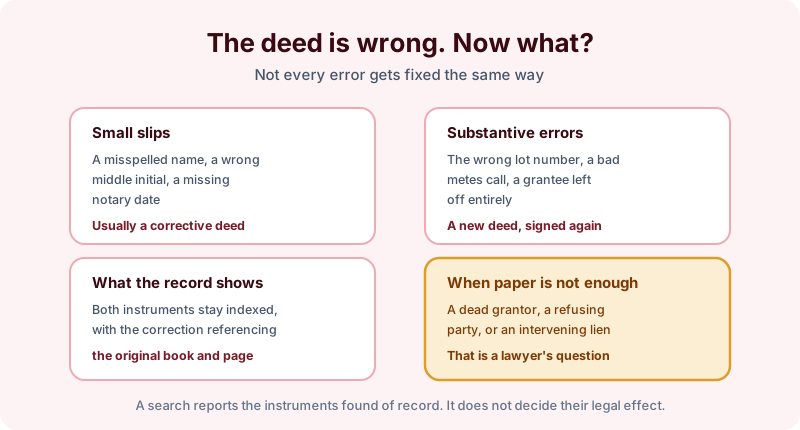
Small errors and substantive ones
A scrivener’s error is a clerical slip that does not change what the parties intended: a misspelled surname, a wrong middle initial, a transposed digit in a parcel number, a missing notary date. These are commonly cured with a corrective deed or, in some states, a scrivener’s affidavit signed by the drafter.
A substantive error changes who or what was conveyed. The wrong lot number, a bad metes and bounds call, a grantee accidentally omitted, or a deed that conveys the whole parcel when only half was sold. Fixing those generally requires a new deed signed by the original grantor, because the correction is a fresh conveyance in substance even if it is labeled a correction.
What the record looks like afterward
Nothing gets erased. Both instruments stay indexed, and a well-drafted correction recites the original book and page, the recording date, and exactly what is being changed. A title search reports the whole sequence, which is why our post on how to read a title search report spends time on the chain rather than just the current deed.
Watch for three things in a corrective instrument:
- A clear reference to the original. A correction that does not identify the deed it fixes leaves two conflicting descriptions in the index.
- The right signatures. A corrective deed signed only by the grantee corrects nothing.
- The date. Anything recorded between the original deed and the correction — a mortgage, a judgment, a tax lien — attached to whatever the record said at that moment.
Re-recording the same deed with handwritten changes is still common in some counties and is the weakest of the options, since altered instruments invite exactly the argument a correction is meant to prevent.
When a filing will not do it
Some errors cannot be papered over. The grantor has died, dissolved, or refuses to sign. An intervening lien attached in the gap. The parties disagree about what was intended. The legal description matches a parcel someone else owns. Those situations move from the recorder’s office to a lawyer’s office, and often to a quiet title action. Whether a given error can be cured by filing is a legal question, not a records question, and it belongs to counsel in that state.
When in doubt
If you are buying, refinancing, or clearing an estate and you know a deed in the chain was corrected, get the full sequence with document copies rather than a one-line index summary. Errors that look cosmetic in an index sometimes read very differently on the face of the instrument.
Our abstractors pull the chain and the recorded instruments so you can see the original and the correction side by side. Order online, or ask us which search depth fits the situation.