

· AFX Research
How to Find Out Who Owns a Property
Property ownership is public record. Where to look for free — the county assessor and recorder — where self-research falls short, and when a verified ownership search is worth it.
Table of Contents
Good news first: property ownership is a matter of public record in every U.S. county. You can get surprisingly far for free — and it pays to know where the free path stops being reliable.
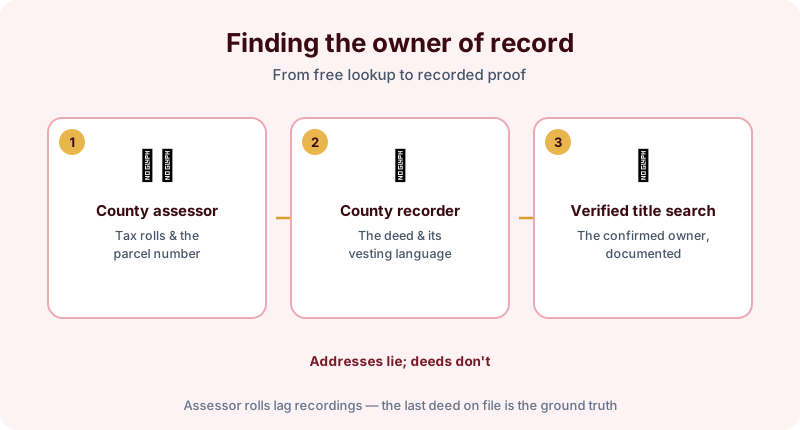
Step 1: the county assessor
Start with the assessor (or tax collector) for the county where the property sits — most publish a searchable parcel database. Searching by address gets you the tax-roll owner, the assessor’s parcel number (APN), and a mailing address for the tax bill.
Two caveats. The tax roll shows who gets the bill, which isn’t always who holds title — and assessor rolls update on a lag, so a recent sale may not appear for weeks or months.
Step 2: the county recorder
The recorder (or register of deeds) holds the documents that actually move ownership. Look the property up in the grantor/grantee index and find the most recent deed. That document names the current owner and — just as important — the vesting: whether title is held individually, jointly, in a trust, or under an LLC.
This is the ground truth. Addresses lie — they change, repeat across county lines, and sprawl across parcels — but the recorded deed is the record that counts.
Where self-research falls short
If the stakes are low, stop there. If money or legal exposure rides on the answer, know the failure modes:
- Is that really the last deed? Miss one later recording — a transfer into a trust, an intra-family deed — and you’ve identified the previous owner with full confidence.
- Name variations. “Robert J. Smith,” “R.J. Smith,” and “Smith Family Trust” index differently; chains get lost on a middle initial.
- Entities. When the owner of record is an LLC or a trust, the deed gives you the entity — finding the people behind it is a separate research problem.
- The description, not the address. Deeds identify property by legal description and APN. Confirming the deed you found covers the parcel you mean is exactly where casual research slips.
When it’s worth verifying
Making an offer, lending against the property, serving legal notice, or clearing due diligence for a cell tower or environmental site — anywhere a wrong answer costs real money — order a certified ownership search. A researcher confirms the current owner of record and vesting from the county’s records and documents it: names as recorded, the vesting deed with its recording date, book, and page, plus everything else open against the property — taxes, mortgages, liens, and judgments — with copies of the documents themselves.
It’s the difference between “the county website said so” and a verified answer you can act on. Order online in a few minutes, or ask us which search depth fits what you’re deciding.