

· AFX Research
Buying at a Foreclosure Auction? Run the Title Search First
Auction sales are as-is, with no title insurance at the courthouse steps. What foreclosure wipes out, what survives it, and the lien-position trap that turns bargains into losses.
Table of Contents
Auction properties sell as-is, sight-mostly-unseen, and with no title insurance on offer at the courthouse steps. Whatever is recorded against that property is your problem the moment the gavel falls. The pre-auction title search isn’t a formality — it’s the entire safety net.
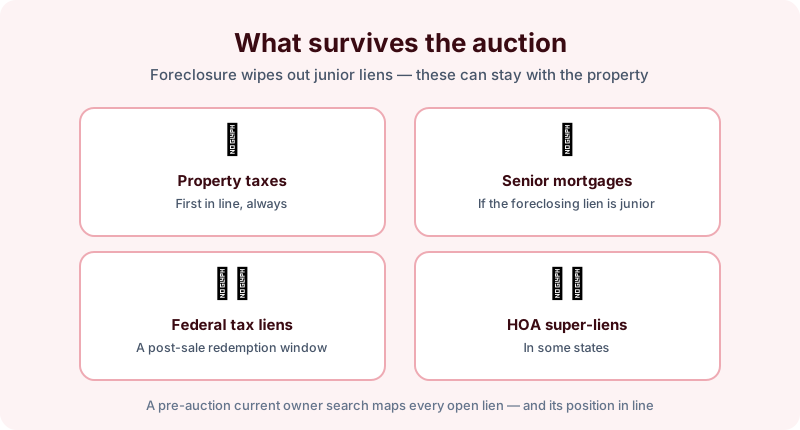
What foreclosure wipes out — and what it doesn’t
The general rule: a foreclosure extinguishes liens junior to the one being foreclosed, while everything senior to it survives and stays attached to the property. On top of that baseline, a few things routinely outrank or outlast the sale:
- Property taxes. First in line essentially everywhere; delinquent taxes ride along to the new owner.
- The senior mortgage — if the lien being foreclosed is a junior one. This is the trap that ruins auction buyers (more below).
- Federal tax liens. Even when properly handled, the government can hold a post-sale redemption window on the property.
- HOA super-liens. In some states, a portion of delinquent association dues gets priority ahead of even a first mortgage.
The trap: bidding on the wrong lien position
The classic auction disaster looks like a bargain. A house worth $400,000 hits the block with a $50,000 opening bid — except the foreclosing lender is a second-position HELOC. Win that auction and you own the house subject to the untouched $300,000 first mortgage. Your “bargain” costs $350,000, and you learn it after the sale is final.
The only way to see this coming is to know every open instrument and its recording order before you bid. That’s exactly what a current owner search abstracts: each open mortgage, deed of trust, lien, and judgment with its recording date, book and page, and amount — the position in line is right there in the dates.
Tax sales have their own rules
At a property tax sale, the taxing authority’s lien generally outranks private liens — but that doesn’t make the slate clean. Other government liens can survive, redemption periods (where the former owner can reclaim the property) vary widely by state, and the quality of what you receive — often a tax deed with no warranties — makes knowing the recorded history more important, not less.
What to order, and when
For most auction buyers the right tool is a current owner search — 75% come back in under a day, which fits auction timelines. Order as soon as the property lands on your shortlist, and read for three things:
- Every open instrument and its recording date — establish which lien is actually foreclosing and what sits ahead of it.
- Tax status — delinquencies you’d be inheriting on day one.
- Judgments and government liens — the usual suspects that follow the property.
Bidding on several properties on the same sale date? Contact us about batching the searches so everything lands before auction day, or order online property by property. Either way: search first, bid second.