

· AFX Research
Title Search for a Farm or Ranch Purchase
Farm ground is several estates stacked on one description, and the deed is the layer least likely to cause trouble. What a search covers on agricultural land, and the access and water questions that decide it.
Table of Contents
Buying farm or ranch land looks simpler than buying a house and is usually more complicated underneath. The deed conveys the surface, and on most agricultural ground the surface is only one of the interests that matter. Minerals, water, timber and access may each have gone in different directions over a century of transfers, and each of them can change what the land is worth to you.
What may already be severed
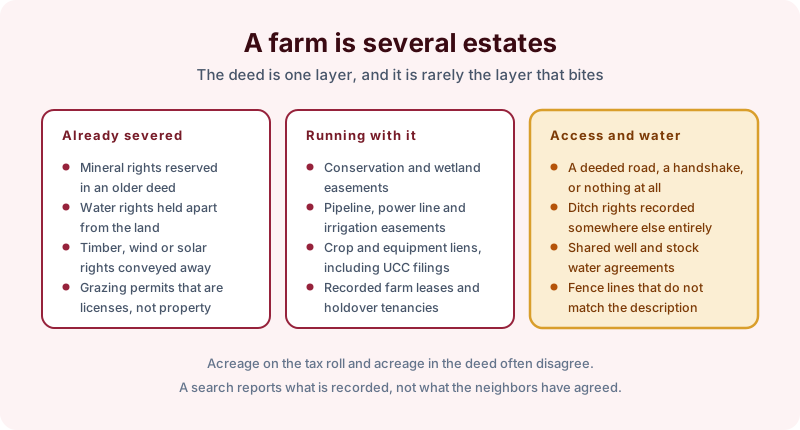
The single most common surprise is that the minerals are gone. A reservation in a 1940s deed severs them permanently, and every deed since then has conveyed the surface alone whether or not it says so. The same can be true of water rights, which in the western states are property in their own right and can be sold away from the land entirely.
Timber rights, wind and solar rights, and in some places carbon or conservation credits may also have been conveyed separately. Federal grazing permits are a different animal again — they are licenses, not property, and they do not automatically follow a sale.
What runs with the land
Recorded agreements survive the seller. Conservation and wetland easements restrict what can be built or cleared, sometimes permanently. Pipeline, transmission and irrigation easements cross a surprising share of productive ground.
Then there are the financing layers. Crop liens, equipment liens and UCC filings can attach to what grows on the land as well as to the machinery, and a recorded farm lease or a holdover tenant can mean you own the ground and somebody else has this season’s crop.
Access and water decide the rest
A parcel that cannot be reached legally is a parcel that cannot be farmed. Plenty of rural tracts are served by a road that has been used for forty years under no recorded right at all, which works perfectly until the neighbor sells.
Water follows the same pattern. Ditch rights may be recorded in a different county or held through a shareholding in an irrigation company. Shared well and stock water agreements are frequently informal. And fence lines, which everybody treats as the boundary, very often do not match the legal description.
What the search will not settle
A records search reports what has been recorded and indexed in the county over the term searched. It does not locate anything on the ground, which is a survey, and it cannot report a handshake arrangement or an unrecorded lease. It also cannot tell you whether a grazing permit will be reissued.
Acreage is worth one specific caution. The figure on the tax roll and the figure in the deed disagree more often on farm ground than anywhere else, and neither is a survey.
The bottom line
On agricultural land the question is not only who owns it but which parts of it are still attached. A full chain search reaching back far enough to find the severances is the version of this search that actually helps, and our product list sets out the options. Order online, or ask us what scope fits the parcel before you commit to one.