

· AFX Research
Title Search for a Property in a Flood Zone
Flood risk is a federal mapping decision rather than an encumbrance, so a clean title report says nothing about it. What a flood history puts in the county record, and the grant restrictions that can make a lot unbuildable.
Table of Contents
Buyers expect a title search to flag flood risk and it does not. The flood zone is a line on a federal map, not an interest in land, so nothing about it appears in the county index. What does appear — and what gets missed constantly — is the set of recorded instruments that a flood history leaves behind on a property that has already been through one.
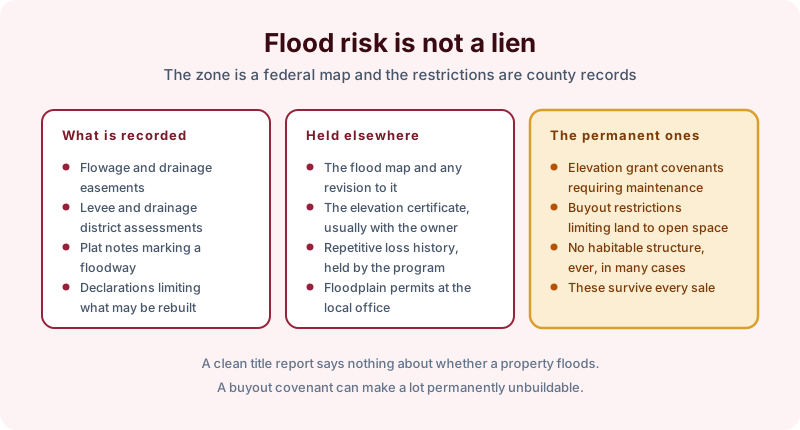
What actually gets recorded
Four things, and a search will find all of them. Flowage and drainage easements, giving somebody the right to put water across the land. Levee and drainage district assessments, which are liens and ride on the tax bill. Plat notes marking a floodway or a regulatory boundary. And declarations limiting what may be rebuilt after a loss.
Each of these is a genuine encumbrance that survives a sale and affects what can be done with the property.
The restrictions nobody prices
Where federal or state money paid to elevate a structure, the grant almost always records a covenant requiring the elevation to be maintained and restricting modifications.
Where a parcel went through a buyout, the deed restriction is usually permanent and severe. Many limit the land to open space with no habitable structure ever again. A buyer looking at cheap riverfront acreage may be looking at land that cannot lawfully be built on, and the covenant is sitting in the chain where a full search finds it and a current owner search may not.
What sits with the agencies
The flood map itself, along with any letter of map revision. The elevation certificate, which is usually held by the owner or does not exist. Repetitive loss history, which the program holds and does not publish. Floodplain development permits at the local office.
None of that is recorded, so order the flood determination and the title search as two separate steps rather than expecting one to cover the other.
Why the district assessments matter
Levee, drainage and reclamation districts are quietly among the most expensive items attached to flood-prone land. They have taxing authority, their assessments attach to the parcel, and in many states they outrank a private mortgage.
Where a district has issued bonds for a major improvement, the per-parcel obligation can run for decades and is not reduced by the property changing hands. A buyer reading only the current tax bill sees one year of it. The recorded instrument creating the district, and any lien filed under it, tells the longer story — which is the same analysis as in special assessment districts and your title search.
What to order
A full chain search rather than a current owner search, because grant restrictions and old easements predate the current ownership. Ask specifically for the plat and its notes, and for copies of any recorded declaration rather than a summary of it.
A records search reports what has been recorded and indexed as of the day it was run. It does not establish flood risk, insurance availability, or whether rebuilding would be permitted after a loss. Those come from the determination, a carrier and the local floodplain administrator.
The bottom line
A clean title report and a flood-prone property are entirely compatible, and the restrictions that matter most are permanent. Compare the available searches and order online, or ask us what term fits a parcel with a flood history before you commit.