

· AFX Research
Title Search for a Property With a Shared Driveway
A shared driveway can be a recorded easement, a plat note, or nothing written down at all. Here is what a title search finds in each case, what it means for maintenance, and why the quiet version is the one to watch.
Table of Contents
Two houses, one strip of pavement. It works fine until somebody repaves, parks badly, or sells. The question a title search answers is not whether the driveway is shared, which you can see, but whether anyone wrote the sharing down — because a recorded agreement and a handshake produce very different outcomes when the neighbors stop agreeing.
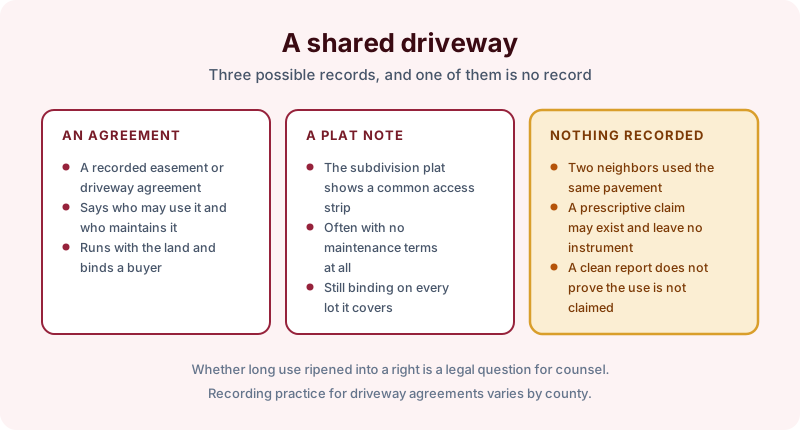
A recorded agreement is the good case
An easement or a shared driveway agreement recorded against both properties will say who may use the strip, who maintains it, and how the cost is split. It runs with the land, so it binds whoever buys next — including you. A search locates it and returns the instrument, which is what you want to read before closing rather than a summary of it.
A plat note is binding but usually silent
Subdivision plats frequently show a common access strip serving two or three lots. The note creates the right and almost never addresses maintenance, snow removal, or what happens when one owner wants to widen the apron. It still binds every lot the plat covers, so a plat-created driveway with no agreement behind it is a live question rather than a settled one.
Nothing recorded is the one to watch
Plenty of shared driveways exist only as habit. Two families used the same pavement for forty years, nobody filed anything, and the deed to each lot describes the full width as belonging to one of them. That is not automatically a problem, but it is unresolved. Long use can ripen into a prescriptive right in many states, and nothing about that process generates a recorded document.
So a clean report does not prove the use is not claimed. It proves nothing was found of record, which is a narrower statement. Whether decades of use created an enforceable right is a legal question for an attorney in that state.
What to do with the answer
If an agreement exists, read the maintenance clause and check whether it was recorded against both parcels or only one. If only a plat note exists, consider asking the seller to paper the arrangement before closing, while there is still leverage. If nothing exists at all, find out who has actually been maintaining the strip and on what understanding — that history is what any later claim would rest on.
A search is not a survey and does not locate the driveway on the ground, so where the width itself is in question, a survey answers what the record cannot. The same split shows up on a property on a private road, where the maintenance obligation is the recurring issue.
The bottom line
Shared access is common and manageable. What makes it expensive is discovering at closing that the arrangement everyone relied on was never written down. A current owner search will surface a recorded easement or a plat note, and the absence of one is itself the useful finding.
Order online, or ask us what a search would cover for that address before you commit to anything.