

· AFX Research
Refinancing? What the Title Search Has to Show
A refinance searches your own history instead of a seller's, so nothing clears itself at closing. The four things the report has to establish, and the old lien that stalls the most files.
Table of Contents
Refinancing feels like it should need less title work than a purchase. You already own the place, nobody is moving, and the property has not changed. In practice the search is often more interesting, because there is no seller whose problems get cleaned up at closing. Whatever has accumulated against the property since you bought it is still there, and it is yours.
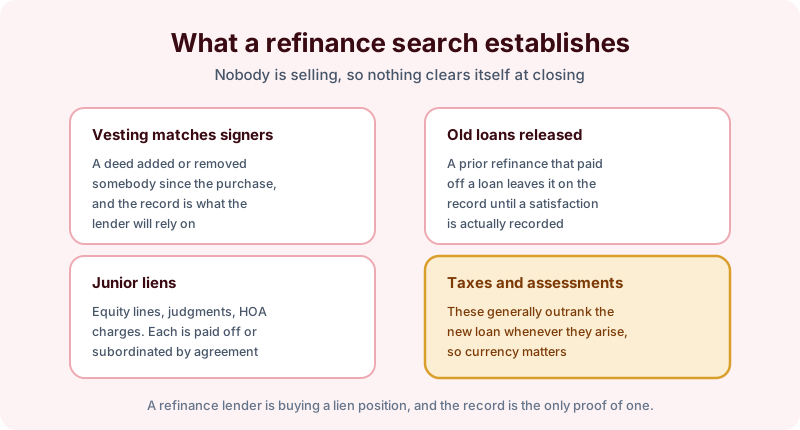
The lender is buying a position
That is the whole transaction from the lender’s side. They are advancing money against a lien that needs to sit in a specific place, usually first, and the record is the only evidence of where it will land. So the report has to answer four things.
Does the vesting match who is signing? A deed may have added a spouse, removed one, or moved the property into a trust since the purchase. What matters is what was recorded, not what anyone remembers doing.
Was the old loan released? If you refinanced before, the loan that was paid off stays on the record until a satisfaction is recorded against the parcel. When nobody followed up, the record shows two mortgages and one real debt.
What sits behind it? Home equity lines, judgments, HOA charges. Each gets paid off or subordinated, and either way it has to be found first.
Are taxes and assessments current? These generally outrank a new loan whenever they arise, which is why they get checked even when nothing else looks unusual.
The old lien that stalls the most files
It is the third item on that list, and specifically the version of it nobody expects: a debt that was genuinely paid, years ago, with no release ever recorded.
There is no money to send and nothing to negotiate. What there is instead is a search for a lender that may have been acquired twice since, to obtain a release for a loan its successor has no live record of. That takes weeks sometimes, and it is the single most common reason a refinance that looked straightforward is still open a month later. Running the search early is what turns it into a task with a lead time instead of a discovery in week three. Most searches come back quickly, so there is little reason to wait.
What is different from a purchase
On a purchase, the search protects a buyer taking on someone else’s history. On a refinance you are the history, which changes two things.
The name searches carry more weight, because a judgment docketed against you four years ago is still docketed and no closing is going to resolve it on its own. Send every name variant, including maiden and former married names.
And the ownership period is longer. A property owned for fifteen years has fifteen years of your own filings, releases, and possible clerical errors sitting in the index, where a recent purchase has almost none.
When in doubt
Order the search when the application goes in rather than when the closing is scheduled, and send every name that has ever been on title. If the property has been in your hands a long time, or refinanced before, expect at least one item that needs chasing. Order online, or ask us with the address and the county and we will confirm the right scope before anything is ordered.