

· AFX Research
Buying Vacant Land? What the Title Search Should Cover
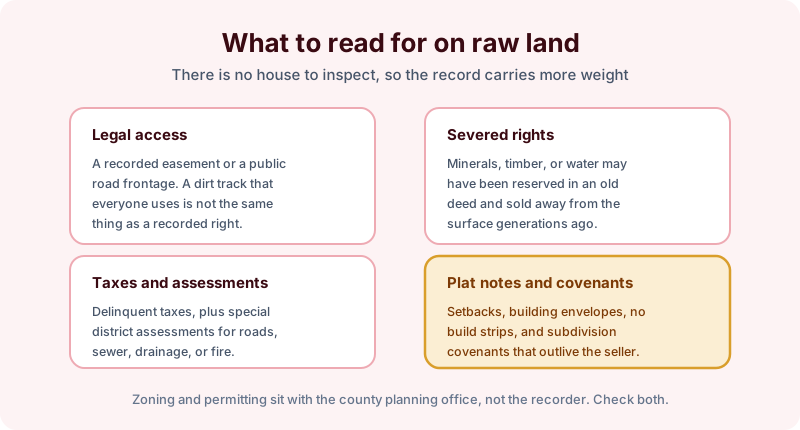
Raw land has no house to inspect, so the recorded history carries the whole load. What to read for on a vacant parcel: legal access, severed mineral and water rights, special assessments, and plat restrictions.
Table of Contents
Buying a house gives you plenty to look at. Buying twenty acres gives you a fence line and a listing photo. On vacant land, the record is most of what there is to inspect — and the things that make a parcel unusable are almost always recorded rather than visible.
Legal access is the big one
A road you can drive on is not the same thing as a right to drive on it. Plenty of parcels are reached by a track across a neighbor’s field that three generations have used without anyone recording an easement. That arrangement can end with a sale, a fence, or an heir who sees it differently.
What you want in the report is either frontage on a public road or a recorded easement that runs with the land. Where the access is by easement, the terms matter: width, permitted use, and whether maintenance is allocated. A parcel without recorded access is not worthless, but it is a different purchase than the one most buyers think they are making.
Rights that were severed long ago
Land is a bundle of rights, and pieces of the bundle get sold separately. Mineral rights are the familiar case, severed by a deed in 1940 and traded independently ever since, sometimes carrying a right of surface entry to reach them. Timber and water rights get reserved the same way in some regions.
A search reads the recorded chain for these reservations. Depending on how far back the search reaches, an old severance may sit outside the term, which is a reason to think about search depth on land that has been in one family a long time.
Taxes, assessments, and the quiet ones
Delinquent property taxes follow the parcel. So do special assessments, which are easy to miss because they are levied by districts rather than by the county: road improvement, sewer, drainage, fire. On a lot in a partially built subdivision, an assessment for infrastructure that was never finished can be a real number.
Judgments and liens against the current owner belong in the same read, alongside anything else a current owner search catches.
What limits the build
Recorded plats carry notes, and notes carry restrictions: setbacks, building envelopes, no build strips along a drainage way, minimum square footage, limits on outbuildings. Subdivision covenants sit on the record too and outlive whoever wrote them.
One boundary worth stating: zoning and permitting live with the county planning office, not the recorder. A title search reports what is recorded against the parcel. Whether the county will let you put a septic system on it is a separate inquiry, and both belong on the checklist.
When in doubt
Order the search before the inspection period runs out rather than after, and send the parcel number or legal description, since raw land often has no street address to work from. Order online, or ask us with the parcel number and county and we will tell you what scope fits the property before anything is ordered.