

· AFX Research
Do Property Taxes Show Up in a Title Search?
Taxes and title live in two different county offices, and only some tax items reach the land records. What a search normally reports, what has to be asked for, and which number escrow will actually use.
Table of Contents
This is one of the most common questions we get, and the honest answer has two halves. Some tax items are recorded in the land records and turn up in any competent search; others live only on the tax roll, in a different office, and have to be requested. Knowing which is which prevents both an unpleasant surprise at closing and a bill for work you did not need.
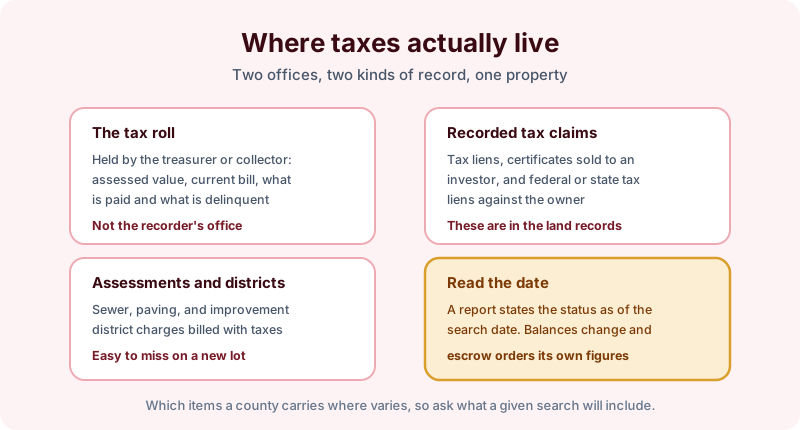
Two offices, two records
The recorder (or register of deeds, or clerk, depending on the state) keeps deeds, mortgages, liens, easements, and everything else recorded against the land. That is the material a title search examines.
The treasurer or tax collector keeps the tax roll: assessed value, the current bill, what has been paid, and what is delinquent. It is a separate system with separate records, and nothing automatically moves between them.
What normally does appear
Several tax-related items are recorded, so they show up the same way a mortgage does:
- Recorded tax liens for delinquent property taxes, where the county files them in the land records.
- Tax certificates or tax deeds, in states that sell delinquent taxes to investors — a sold certificate is a serious finding, and it is exactly the kind of item that survives a foreclosure auction.
- Federal and state tax liens against the owner personally, which attach to real property they hold.
What has to be asked for
Current-year taxes and the paid-or-delinquent status usually do not come from the recorder’s office at all. Many search products include a tax status check anyway, because clients expect it — but that is a scope question, not an assumption. If you need it, say so when you order, and our note on how long a search takes explains why adding it rarely changes the timeline.
There is a related item worth naming: a tax sale or tax deed proceeding already underway. The filings that start one are usually recorded, but the administrative deadlines behind them are held by the collector, so a report can show the notice without showing how much time is left to redeem.
Special assessments deserve their own mention. Sewer, paving, and improvement-district charges are frequently billed with property taxes rather than recorded as liens, and they are easiest to miss on a newly platted lot or in a young subdivision.
Why the figure still is not the closing figure
Even a reported tax status is a snapshot: accurate as of the search date, in the county searched. Balances change with penalties and interest, payments post late, and practice varies from county to county on what gets recorded versus rolled. Escrow or the closing attorney orders their own tax certificate or payoff for the closing itself, and that document, not the title report, controls the money.
When in doubt
Ask for what you actually need before ordering rather than reading it into the product. Tell us whether you want recorded tax liens only or a current tax status as well, and order online with that noted — or ask us and we will tell you which office holds the answer in that county.