

· AFX Research
Found a Problem in Your Title Search? What Happens Next
Most findings on a title report are paperwork rather than disasters. The four kinds of problem a search turns up, what each one takes to clear, and which one actually needs a lawyer.
Table of Contents
A title report comes back with something on it, and the reasonable first reaction is that the deal is in trouble. Usually it is not. Most findings are administrative, and a good share of them are somebody’s forgotten paperwork rather than a live claim against the property. What matters is telling the categories apart, because they differ enormously in how long they take to clear.
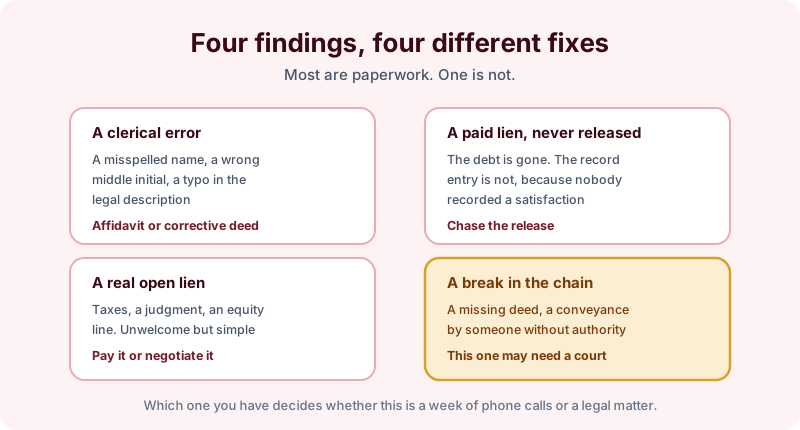
A clerical error
A misspelled name, a wrong middle initial, a transposed digit, a missing notary date. These get recorded because recording offices index what is presented rather than proofreading it.
The fix is usually an affidavit or a corrective deed recorded alongside the original. Days rather than weeks, and it is the most common category by far. Errors in the legal description deserve more attention than a name typo, since a description copied from the wrong prior instrument can affect what was conveyed.
A paid lien that was never released
The debt is gone. The record entry is not, because nobody recorded a satisfaction when the loan was paid off. This is the single most common reason a straightforward closing runs long.
Nothing is owed and nothing is negotiable. What it takes is locating the lender, or whoever acquired it, and obtaining a release to record. On an old item that can mean chasing a successor institution twice removed, which is why finding it early matters.
A genuine open lien
Unpaid property taxes, a judgment, an equity line nobody mentioned, an HOA balance. Unwelcome, and structurally the simplest of the four: there is a number, and it gets paid at closing, negotiated down, or credited against the price. These are the usual suspects a search catches, and they are the reason to search before the inspection period runs out rather than after.
A break in the chain
This is the category worth taking seriously. A deed that was never recorded, a conveyance by someone who may not have had authority to make it, an heir who never signed, a boundary described inconsistently across three instruments.
These are legal questions rather than paperwork, and they can require a curative filing or a court action. That is a matter for a real estate attorney in the state where the property sits. Our job is to find and document what is of record, with the instruments attached, so counsel has the facts to work from.
What to do with the report
Read the recording dates, not just the list. They establish the order of everything and they tell you how old a problem is, which usually predicts how long it takes to clear.
Then sort the findings into the four buckets above and ask who owns each one. The seller clears items from their own ownership; older items may be a prior owner’s paperwork and simply need chasing. Our reading guide covers the layout.
A report is also accurate only as of its search date. On a longer escrow, an updated search before closing is the one thing that covers the gap.
The bottom line
Three of the four categories are paperwork with a timeline, and only the fourth needs a lawyer. Find out which you have before assuming the worst, and order early enough that a phone-call problem does not become a closing-date problem. Order online, or ask us about anything on your report and we will tell you what the record actually shows.