

· AFX Research
Free County Records vs. a Certified Title Search
County records are public and often free to browse, so why pay for a search? Because a portal gives you one office's index — and a certified abstract tells you what is against the property, with the documents to prove it.
Table of Contents
Property records are public, and in most counties you can browse a good chunk of them from your couch at no cost. So the question is fair: why pay for a title search at all? The honest answer is that free records and a certified search are not the same product — one is raw material, the other is a finished answer.
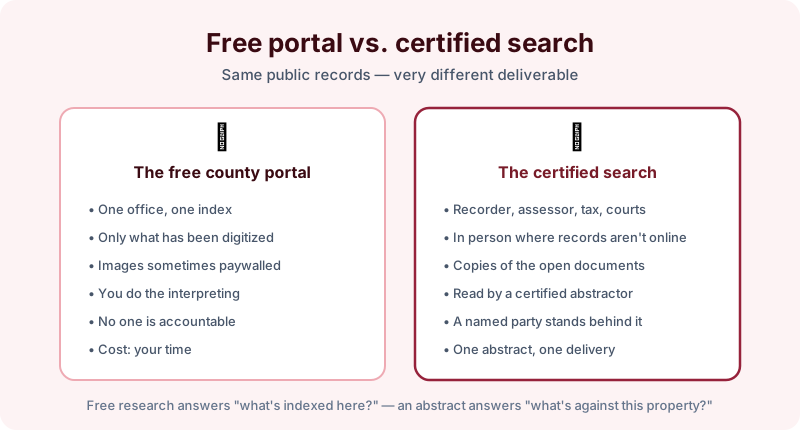
What the free portal actually gives you
A county search site is a window into one office’s index, usually the recorder’s. That is genuinely useful. You can often confirm a current owner, spot a recent deed, and see that a mortgage exists. What you are getting, though, is a list of document references from a single system, limited to whatever that county has digitized. Many portals stop at the index and charge for images. Some go back twenty years online and no further.
One property, four offices
The records that affect a property are spread across separate offices that do not talk to each other.
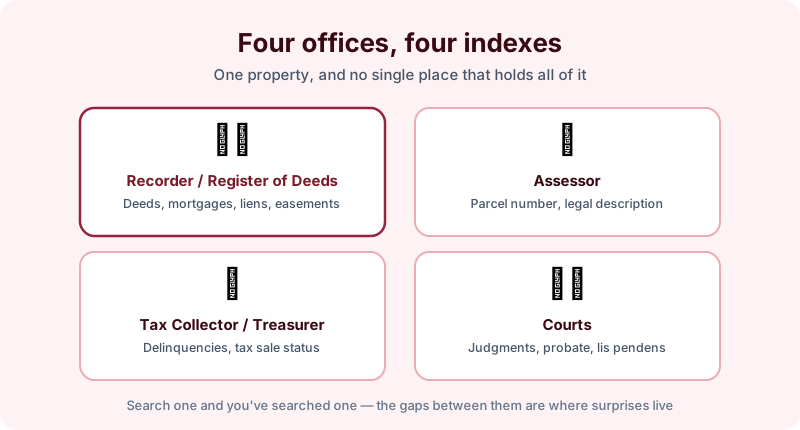
The recorder holds deeds, mortgages, liens, and easements. The assessor defines the parcel and its legal description. The tax collector knows whether taxes are current or heading for a sale. The courts hold judgments, probate matters, and lis pendens filings. Searching one of the four is not a title search — it is one quarter of one, and the gaps between them are where the expensive surprises live.
The gaps that catch DIY searchers
Even inside a single index, the failure modes are consistent.
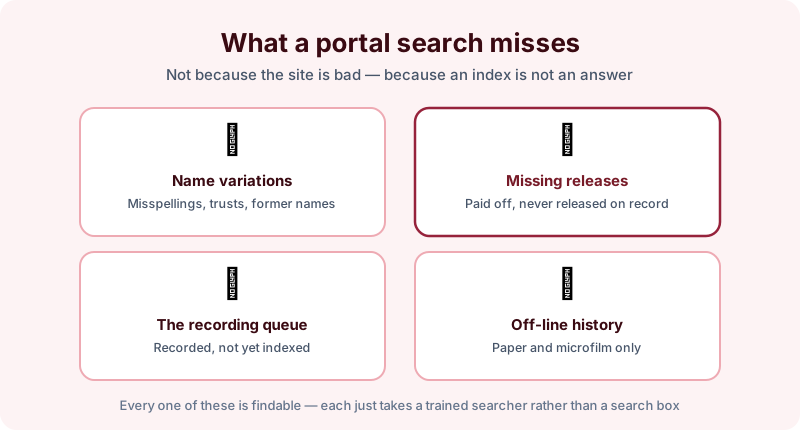
Names are the big one. A lien filed against a trust, a former married name, or a misspelling sits in the index invisible to anyone searching the spelling they were given. A mortgage paid off years ago but never released still clouds the record. Filings sit in the recording queue for days before they are indexed, and recording practice varies from county to county. Older instruments may exist only on paper or microfilm, which means someone has to go to the courthouse.
Where free research still makes sense
Use it for triage. Confirming an owner’s name, checking a parcel number, or getting a rough sense of a property before you spend money is a perfectly good use of a county portal — and our guide to finding a property owner walks through doing it well. What free research cannot do is support a decision where being wrong costs real money.
The bottom line
If you are curious, browse the county site. If you are buying, lending, or closing, order the abstract: a current owner search covers the offices above, includes copies of the open documents, and is read by a certified abstractor before it reaches you — and most come back in under a day. One caution worth stating plainly: no search is an inventory of everything that could ever affect a property, and a clean report documents what was found in the records searched, not a guarantee that nothing exists. That is exactly why it matters who did the searching. Order online, or ask us which scope fits your situation.