

· AFX Research
Joint Tenancy and Survivorship in a Title Search
Survivorship is created by specific words in the deed and broken by things nobody announces. What a search actually checks, why the phrasing decides the outcome, and the deed people are most often wrong about.
Table of Contents
Two people buy a house together and everybody assumes that if one of them dies, the other simply owns it. Sometimes that is exactly right. Whether it is right depends on a phrase in the deed, and a surprising number of deeds do not contain it. Which is why the vesting language is one of the first things read in any search.
Survivorship is created by wording
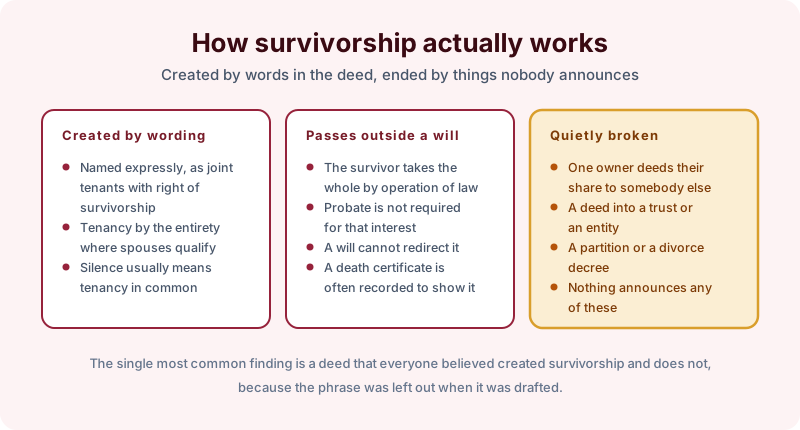
In most states a survivorship tenancy has to be stated expressly, in words like “as joint tenants with right of survivorship” rather than merely “as joint tenants”. Tenancy by the entirety does the same job for married couples where the state recognizes it. Where the deed says nothing at all, the default in most places is tenancy in common, which carries no survivorship at all.
That default is the important part. Two names on a deed does not mean survivorship. It means two owners.
What survivorship does
The survivor takes the whole interest by operation of law the moment the other owner dies. It does not pass through the estate, a will cannot redirect it, and probate is not needed for that particular asset. In practice a death certificate or an affidavit is recorded to make the change visible in the index.
That also means the deceased owner’s creditors and heirs generally have no claim to it, which is one reason people choose the form deliberately.
What quietly breaks it
Several things end a survivorship tenancy without any announcement.
- One owner conveys their share. In many states a deed from one joint tenant to a third party severs the tenancy, converting it to a tenancy in common for everyone.
- A transfer into a trust or an entity. Common in estate planning and frequently done without anybody thinking about the survivorship consequence.
- A partition action or a divorce decree. Either can sever it, which is a separate problem from what a decree does to the deed generally.
None of those are visible without reading the chain, and all of them are recorded, which is exactly what a search is for.
What the search checks
The current vesting deed and its exact wording. Every conveyance since, looking for a severance. Death certificates or affidavits recorded to establish a prior survivorship. And liens indexed against each owner separately, since a judgment against one co-owner behaves differently depending on the tenancy.
Whether a particular phrase created survivorship under that state’s law is a legal question. What the search establishes is what the deed says and what has happened to it since.
The bottom line
The single most common finding here is a deed that everybody believed created survivorship and does not, because the phrase was left out when it was drafted. Reading the deed costs a search. Finding out at a funeral costs a probate. Order online, or ask us what a search on that address would show about how title is held.