

· AFX Research
Transfer on Death Deeds and Your Title Search
A transfer on death deed is recorded while the owner is alive and does nothing until they die. What it looks like in the county record, what it does not protect a beneficiary from, and why the search still matters.
Table of Contents
A transfer on death deed, called a beneficiary deed in some states, is recorded during the owner’s lifetime and transfers nothing at all until the owner dies. It is a deed that waits, and that single quality is what makes it easy to misread in a title search. You can find one in the record, correctly recorded, naming a beneficiary who currently owns no interest in the property whatsoever.
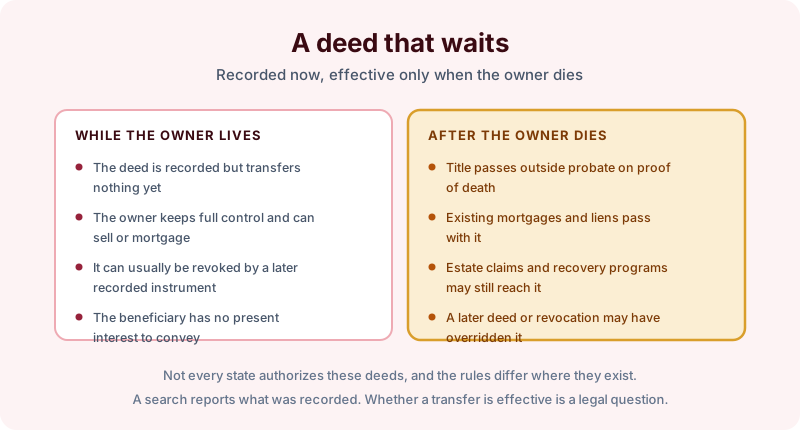
While the owner is alive
Nothing has moved. The owner keeps full control, can sell the property, can mortgage it, and can revoke the deed by recording a later instrument. The named beneficiary has an expectation rather than an interest, and cannot convey or encumber anything.
That matters when you are searching. A recorded transfer on death deed is not evidence that the current owner has changed, and a beneficiary named in one is not the person to run a lien search against. It also means the owner can undo the whole arrangement without telling anyone, which is precisely what makes the most recent recorded instrument the only one that counts.
After the owner dies
Now the property passes to the beneficiary, usually on recording proof of death rather than through probate, which is the point of the instrument. What it does not do is arrive clean.
Existing mortgages and liens pass along with the property. Claims against the estate can still reach it in many states, and estate recovery programs are a common source of surprises. A later deed, a later transfer on death deed, or a recorded revocation may also have overridden the one you are looking at, so the most recent instrument is the one that governs.
Not every state authorizes these deeds, and the states that do have different rules on revocation, on multiple beneficiaries, and on creditor claims. Whether a particular transfer was effective is a legal question, not something a search resolves.
What the search should cover
Search the parcel and the names, and read the whole sequence rather than the first transfer on death deed you find. The questions are the same ones that come up with inherited property, because the underlying situation is the same, and only the mechanism differs.
A beneficiary planning to sell or refinance needs to know what came with the house. A buyer purchasing from one needs to know that the transfer actually happened and that nothing recorded later disturbs it. Both are ordinary parcel searches, and both are worth running before money moves, in the same way a title search before listing your home surfaces problems while there is still time to fix them.
When in doubt
A recorded transfer on death deed tells you what the owner intended, not what has happened. Read the dates, read what came after it, and treat the property as carrying whatever was already attached to it. Order online for a certified search of the parcel and the names, or ask us what the search would and would not cover first.