

· AFX Research
Buying Inherited Property? What the Title Search Shows
Estate sales turn on one question a search answers directly: who can actually sign the deed. The three routes inherited property takes to the record, and the liens that outlive an owner.
Table of Contents
Inherited property is one of the better deals available to a patient buyer and one of the slower closings you will ever sit through. The reason is almost never the price. It is that nobody is certain who has authority to sell. That question gets answered from the record, and answering it early is the difference between a six-week close and a six-month one.
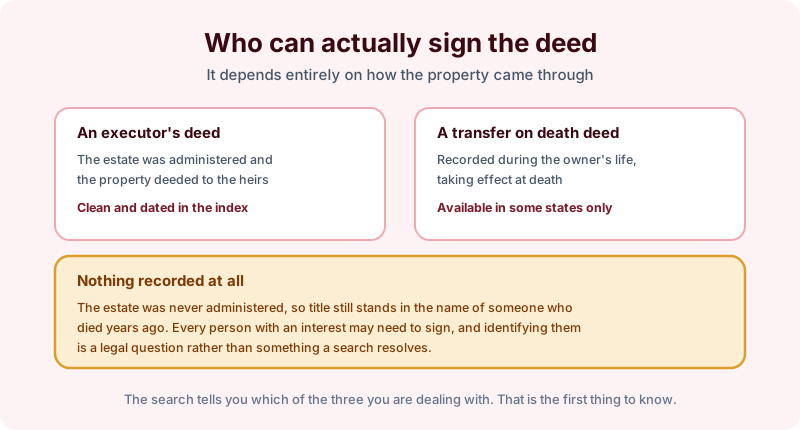
Three routes, three levels of difficulty
An executor’s or personal representative’s deed. The estate went through probate and the property was deeded out to the heirs. Recorded, dated, and straightforward. Whoever holds title now can sell like any other owner.
A transfer on death deed. Recorded during the owner’s lifetime and taking effect at death. Available in some states and not others, and where it exists it moves title without probate.
Nothing recorded at all. The owner died, the family kept paying the taxes, and no estate was ever administered. Title still stands in the name of someone who died in 2011. This is far more common than people expect, particularly on family land, and it is the version that stalls sales.
In that third case, everyone with an interest may need to sign. Identifying who that is means applying the law of intestate succession or reading a will, which is a job for an attorney rather than a search. What the search does is tell you which of the three situations you are in, which is the fact everything else depends on.
Liens outlive the owner
Death does not clear anything. Whatever was recorded against the property is still recorded against it, and a few categories are specific to this situation.
- Mortgages and equity lines remain, and the balance keeps accruing.
- Property taxes keep coming due, and unpaid years accumulate. On a long-dormant estate this can be the largest number in the file.
- Medicaid or state recovery claims may attach where the deceased received long-term care benefits. Treatment varies substantially by state.
- Judgments against the deceased, and sometimes judgments against an heir, which can attach to that heir’s fractional interest.
That last one catches buyers. An heir with a judgment against them brings it to the closing table attached to their share, and a search run only against the deceased owner’s name will not surface it. Ask us to search the heirs’ names too, since name variants matter here as much as anywhere.
What to ask for
Order a search that reaches back past the date of death rather than one covering only recent years, because the operative deed is the one that came before everything. Ask for the vesting deed, the tax status, and every open encumbrance with its recording date, the same things any current owner search delivers, run against a longer window.
Send the deceased owner’s name, every name variant they used across a long life, and the heirs’ names. The property address plus a parcel number or legal description rounds it out.
The bottom line
A title search cannot tell you who inherited the property, and it can tell you whether anyone recorded anything about it, which is the practical starting point. Get that answer before you write an offer with a 30-day close in it. Order online, or ask us with the address and the county and we will confirm the right scope before anything is ordered.