

· AFX Research
Name Variations: Why a Title Search Can Miss a Lien
County indexes match strings, not people. Here is how a single owner ends up recorded four different ways, which name variants actually matter, and what to send so the search covers all of them.
Table of Contents
A title search has two halves. One runs against the parcel, and it is reliable in a mechanical way: the land does not change its name. The other runs against the people, and that half is only as complete as the list of names it was given. County indexes match text strings, not human beings, and a judgment recorded under a nickname is invisible to a search run on a formal name.
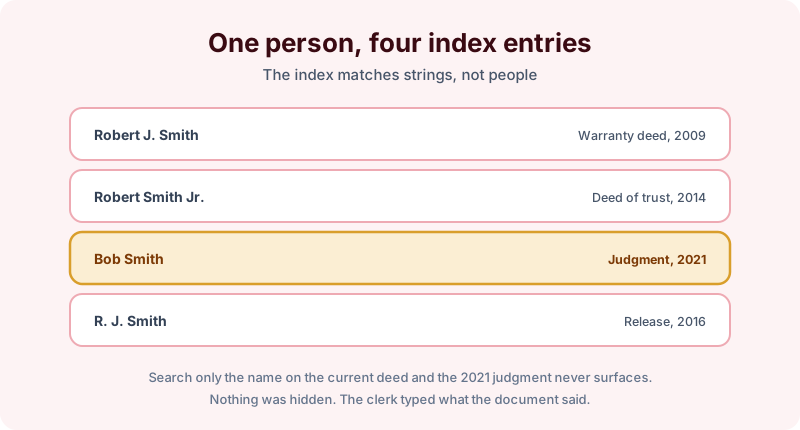
How one person becomes four entries
Nothing devious is happening. A clerk indexes what the document says, and documents say different things depending on who typed them. The deed reads Robert J. Smith. The refinance reads Robert Smith Jr. The judgment reads Bob Smith, because that is the name on the account. A 2016 release reads R. J. Smith.
Four strings, one owner, and an index that has no way to know they are the same person. Search only the name on the current deed and the 2021 judgment does not appear on the report. It is still attached to the property.
The variants that matter most
- Maiden and former married names. The single most common gap. Liens attach during a marriage that ended, under a name nobody thinks to mention.
- Middle names and initials. Present, absent, or reduced to an initial across three instruments for the same person.
- Generational suffixes. Junior and senior on the same property is a genuine trap, and dropping the suffix merges two people’s records into one search.
- Nicknames. Bob, Bill, Peggy, Chuck. Court filings frequently use whatever the creditor had on file.
- Hyphenated and compound surnames. Indexed under either half, sometimes both.
Entity names run the same risk, with punctuation added: an LLC recorded once with a comma before the designation and once without may not return on one query, and prior names after a merger are separate strings entirely. Property held by an LLC or a trust is searched under the entity, so those variants matter as much as personal ones.
Where the parcel half saves you, and where it does not
This is worth being precise about. Instruments recorded against the property itself — mortgages, deeds, most tax liens — are found through the parcel regardless of how a name was spelled. That half of the search is robust.
Judgments are the exposure. A judgment is docketed against a person, and it reaches the property because that person owns it, not because the judgment ever named the parcel. Find the name, find the judgment. Miss the name, miss the judgment, and it is still there at closing. That is why the usual problems list leans on name searching so heavily.
What to send
Every name each owner has used: current legal name, maiden name, prior married names, middle names in full, suffixes, and any nickname that might appear on a court filing. For entities, the exact registered name, the state of organization, and any prior names.
Nobody minds a long list. An extra name costs a few minutes of searching; a missing one costs a surprise at closing.
The bottom line
The parcel half of a search takes care of itself. The name half is a collaboration, and it is only as good as the list you supply. Order online with every variant you can think of, or ask us if you are unsure which names belong on the list before anything is ordered.