

· AFX Research
Lien Search vs. Title Search: What's the Difference?
The two names are used interchangeably and the products are not identical. What each one is built to answer, where they overlap, and which one you actually need for a purchase, a refinance, or a debt question.
Table of Contents
Ask three companies for a lien search and you may get three different documents back. The term is genuinely loose in the industry, which is why the useful question is never “is this a lien search or a title search” but what is being searched, against what, and for which years — and that is a question you can settle in one email before you order.
What each one is built to answer
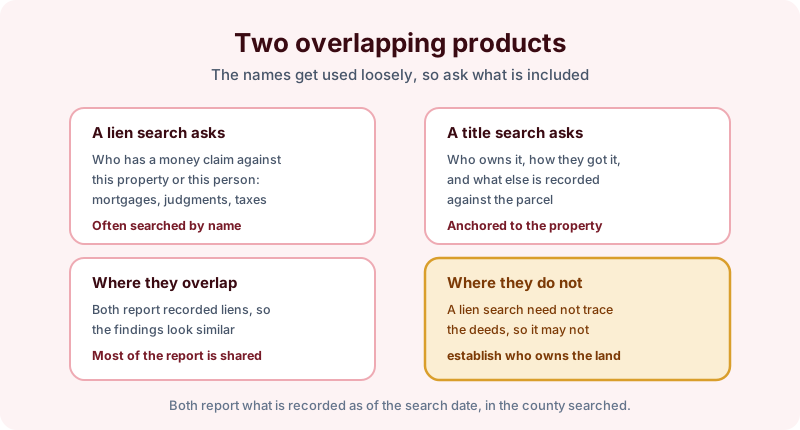
A lien search asks who has a money claim: mortgages, deeds of trust, judgments, tax liens, mechanic’s liens, HOA claims, and support or Medicaid-related filings. It is frequently run against a name as well as a property, which matters because judgments attach to people and then reach whatever real estate those people own.
A title search asks who owns the property, how they came to own it, and what else is recorded against the parcel — including the liens, plus easements, covenants, and the defects that show up in the deeds themselves. It is anchored to the property and to the chain of instruments behind it.
There is a third label worth knowing, because it is the one lenders and investors actually order: an O&E report, short for owners and encumbrances. It sits between the two, confirming current vesting and listing what is recorded against the parcel without the full chain-of-title narrative.
Where they overlap
Most of the report. Both products pull the same recorded encumbrances from the same index, so on a clean residential parcel the two documents can look nearly identical. That similarity is exactly why the labels stopped being reliable.
Where they do not
The gap is ownership. A lien search does not necessarily trace the deeds, so it may not establish that the person who signed your contract is the person on title, or catch a vesting problem left by a death, a divorce, or a trust transfer. Those are the problems a current owner search catches, and they come from reading the conveyances rather than the liens.
A lien search also may not report easements or restrictive covenants, since those are not money claims. On a purchase that distinction can matter more than any lien, because a lien gets paid at closing and a recorded restriction stays with the property.
Depth is the other variable hiding behind both labels. A search covering the current owner only is a different product from one reaching back two owners or through the full chain, which is the choice laid out in our note on a current owner search versus a full chain of title.
Which one you need
- Buying, or anything where ownership has to be right: you want the ownership work, not just the liens.
- Refinancing: usually the same, since the lender needs its position confirmed against the whole record.
- Chasing a debtor or checking a judgment: a name-based lien search is often exactly the right, cheaper tool.
- Selling: liens are the usual worry, and a pre-listing look covers them.
The bottom line
Buy the scope, not the label. Tell us whether you need ownership traced, which names to run, and how far back to look, and we will tell you what the report will contain before you pay for it. Order online, or ask us which product fits the question you are trying to answer.