

· AFX Research
Mineral Rights and Your Title Search
In much of the country the minerals were sold off generations ago, and the deed you signed may not mention it. What a title search shows about severed minerals, and what depth of search it takes to find out.
Table of Contents
Buying a house or a piece of land does not automatically mean you own what is under it. In large parts of the country the mineral estate was severed from the surface decades ago, usually by one sentence in one old deed, and the warranty deed handed to you at closing may say nothing about it at all.
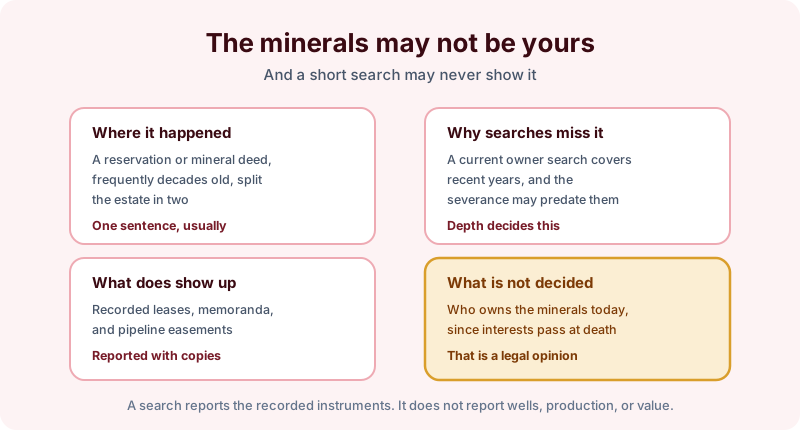
Where the split happened
A grantor conveys the land and reserves the minerals, or sells the minerals separately by mineral deed. From that moment the two estates travel through the chain independently, and neither one has to mention the other again. A wall of later deeds can pass the surface without ever repeating the reservation.
In many states the mineral owner also holds rights on the surface, meaning they or their lessee may use as much of it as is reasonably necessary to reach what they own. What that permits depends on state law and on the wording of the severing instrument, and it is a question for a lawyer rather than an abstractor.
Why a standard search may not show it
This is the practical part. A current owner search covers recent years, and a reservation from 1948 sits well outside that window. The search is accurate and the reservation is still there. Depth is what decides whether you see it, which is the subject of our note on how far back a search goes.
What does turn up in a search of any reasonable depth is the surrounding paperwork: recorded oil and gas leases, memoranda of lease, pipeline and gathering line easements, and any assignments of them. Those are useful signals that somebody has been active in the area, and they come with copies.
There is a second reason these reservations stay hidden. Property tax records and listing data almost never reflect them, so a parcel can be advertised, appraised, and insured for years with nobody looking at the instrument that split the estate. The first time it comes up is usually a letter from a leasing agent or a title objection at resale.
What a search cannot settle
Two limits are worth stating plainly. A records search cannot establish who owns the minerals today. Mineral interests pass at death, get divided among heirs, and change hands with nothing filed in the county where the land sits, so the last grantee named in the record is not necessarily the current owner. Establishing present ownership is a legal conclusion set out in a mineral title opinion written by counsel.
And a search does not report wells, permits, or production, which state regulators hold rather than the county recorder, and it does not value an interest.
Neither limit makes the search less useful. Knowing that a reservation exists, and holding a copy of the deed that created it, is what lets a lawyer answer the ownership question at all. Buying rural land without that document is the avoidable version of the problem.
When in doubt
If you are buying rural land, inheriting a family tract, or you have received a letter from a leasing agent, order enough depth to reach the severance and ask for copies of the instruments rather than an index summary. Order online, or ask us what term it would take to reach the era where the split most likely happened.