

· AFX Research
Title Search Before Listing a Short Term Rental
A city permit does not override a recorded covenant, and a neighbor can enforce one even where the ordinance allows the rental. What the land record holds, what it does not, and why the order matters.
Table of Contents
Most people researching a short term rental start with the city. Is it allowed, is there a permit, is there a cap. Those are the right questions in the wrong order. A municipal permit tells you the city will not object. It says nothing at all about whether the deed to your own property already forbids what you are about to do.
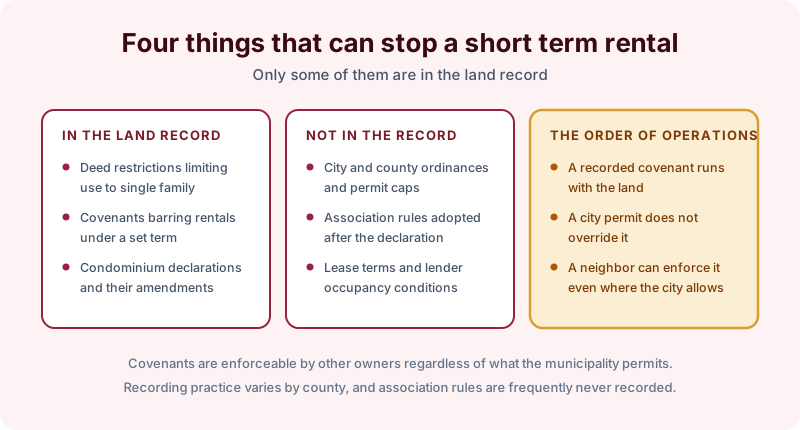
What sits in the land record
- Deed restrictions limiting use to single family residential. Older subdivisions are full of these, and some have been read to bar commercial use of a home.
- Covenants barring rentals under a stated term. Thirty days and six months are the common thresholds, and a covenant written in 1978 against transient occupancy applies perfectly well to a modern listing.
- Condominium declarations and their amendments. The declaration is recorded, so it is findable. Amendments are recorded too, and they are the ones people miss.
A search will find these where they were recorded and indexed, which for covenants and declarations is nearly always.
What does not sit in the land record
City and county ordinances, permit caps and licensing requirements live with the municipality. Association rules adopted by a board after the declaration was recorded frequently never reach the recorder at all. Lender occupancy conditions sit in your loan file, and an insurer’s position sits in your policy.
None of that is a reason to skip the search. It is a reason to understand that the search answers one of the four questions, and it happens to be the one with the longest reach.
Why the covenant outranks the permit
A recorded covenant runs with the land and binds every future owner. It is enforced by the other owners in the subdivision or by the association, not by the city, and their right to enforce does not depend on what the municipality permits.
That produces the situation people find genuinely surprising. The city issues a permit. The rental operates for eight months. A neighbor reads the 1978 covenants, sends a letter, and is entirely within their rights. The permit was never a defense. It is the same mechanism that catches people building an ADU with a valid permit and a restrictive deed.
What to order
A current owner search will surface the deed, the restrictions of record and the declaration if there is one. Ask specifically for the recorded covenants and any amendments rather than a summary, because the operative language is usually a single sentence and the whole question turns on how it reads. Whether that sentence reaches your listing is a legal question, and it is worth putting in front of counsel before the first booking rather than after the first letter.
The bottom line
Check the deed before the permit. A covenant recorded decades ago binds the land regardless of current zoning, and the people entitled to enforce it live next door. Finding it costs a search. Finding it late costs the bookings and possibly a lawsuit.
Order online, or ask us what a search on that address would cover before you list.