

· AFX Research
Title Search Before Building an ADU
Cities have opened up accessory dwelling units, and a recorded covenant on your lot can still forbid one. What the land record controls, what the city controls, and why they are different questions.
Table of Contents
Accessory dwelling units have gone from difficult to encouraged in a lot of places, and homeowners are reasonably reading the zoning change as permission. Zoning is only one of the two things that can stop you. The other is a private restriction recorded against your lot, and no amount of municipal enthusiasm overrides it.
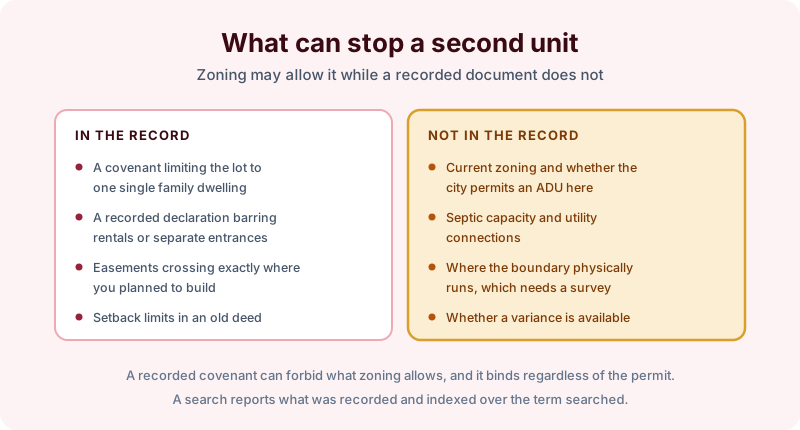
What can be sitting in the record
Four findings come up repeatedly.
- A single family covenant. Language in an old deed or subdivision declaration limiting the lot to one single family dwelling. These were written decades ago and they run with the land.
- A rental or occupancy restriction. A declaration barring rentals, separate entrances, or separate kitchens. Common in planned communities, and covered further in deed restrictions and your title search.
- An easement in the way. A utility, drainage, or access easement running exactly across the back corner where the unit was going. It does not forbid the ADU; it forbids building there.
- Setback and height limits written into a deed. Separate from and additional to whatever the zoning code says.
The private restriction usually wins
This is the part people find counterintuitive. A city legalizing ADUs does not cancel a private covenant. The city is saying it will not object; the covenant is a promise that runs with your land, enforceable by whoever holds the benefit of it, typically an association or a neighboring owner.
So a permit is not a defense. You can be fully permitted and still be told to stop, and the person telling you may be three doors down.
What the search will not tell you
It will not tell you whether the city permits an ADU on your lot, whether the septic system has capacity, whether utilities can be extended, or whether a variance is available. Those are municipal and engineering questions.
It also will not tell you where your boundary physically runs. An ADU crowded against a side lot line is exactly the situation where the deed and the fence turn out to disagree, and only a surveyor settles that. Our note on whether a title search shows property lines covers the distinction.
Do it before the drawings
The cheapest moment to find a single family covenant is before an architect has been paid. Order the search when the idea is still an idea, read the recorded restrictions, and then talk to the city. Doing it in that order means the municipal conversation happens with the private constraints already known.
If a restriction does turn up, it may be releasable. An association can sometimes amend a declaration, and some old covenants have been cut off by state statute. Both are questions for an attorney rather than a search.
The bottom line
Zoning permission and a clean deed are two different things, and only one of them is in the county record. Recording practice varies by county, and an empty result means nothing was found in the indexes searched rather than that nothing exists. Order online for a certified search of your parcel, or ask us what the search would and would not cover first.