

· AFX Research
Title Search for a 1031 Exchange
An exchange runs on deadlines that do not extend for a title problem, which makes the identification window the moment to search. What to check on the replacement property and on the one you are selling.
Table of Contents
Most closings absorb a title surprise by moving the date. An exchange cannot, because the deadlines are fixed and a title defect is not a reason to extend them. That single fact changes when the search should happen, and it is the whole argument for doing this work early.
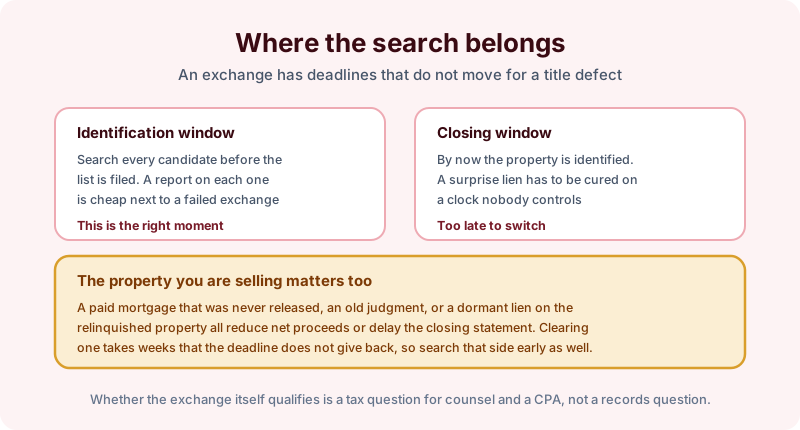
Search during identification, not after
Once a replacement property is identified, switching to a different one is a decision with tax consequences rather than a simple change of mind. So the questions a search answers, who owns it, what encumbers it, whether the description matches the parcel, need answering while the list is still being built.
The cost math is favorable. A report on each of four candidates is small relative to the deferral at stake, and it usually eliminates one or two before anyone pays for an inspection. Turnaround helps here, and ours is covered in how long a title search takes.
What to check on the replacement property
Ordinary diligence, run earlier than usual. Confirm the record owner and how title is held, because an entity-held property is not interchangeable with one held individually, and a record that disagrees with the client’s understanding is a problem worth finding in week one rather than week six. Run mortgages, judgments, and tax liens, since every recorded encumbrance found becomes a payoff, a subordination, or a reason to move on.
Then read the restrictions and easements, and check the legal description against the tax parcel. Multi-parcel property is where that last one earns its keep: a description covering three of four parcels is a common defect, and in an exchange it can mean the property identified is not quite the property acquired. Whether a current-owner report is enough or the full chain is warranted is covered in current owner search versus full chain of title.
Do not skip the property you are selling
The relinquished side gets forgotten and it carries real exposure. A paid mortgage nobody released, an old judgment lien, or a dormant assessment all reduce net proceeds, and a payoff that shifts late can leave cash in the deal that was never planned for. Clearing a stale lien takes weeks. Pull that search early enough that the closing statement is not the first time anyone sees it.
What a search will not decide
It reports what was recorded and indexed in that county over the period searched, with copies. It does not tell you whether the exchange qualifies, whether the property is like-kind, whether a partial interest works, or how a related-party acquisition will be viewed. Those are questions for counsel and a CPA. The record tells you what is attached to the dirt, and an empty result means nothing was recorded rather than that nothing exists.
The bottom line
Order searches on candidate properties inside the identification window and on the relinquished property before the closing statement is drafted. Order online, or ask us to match the scope to the size of the transaction.