

· AFX Research
Title Search for a Cash Purchase
Paying cash removes the lender, and the lender was the party who insisted on a title search. What a cash buyer should order instead, and why a problem found after closing is much harder to undo.
Table of Contents
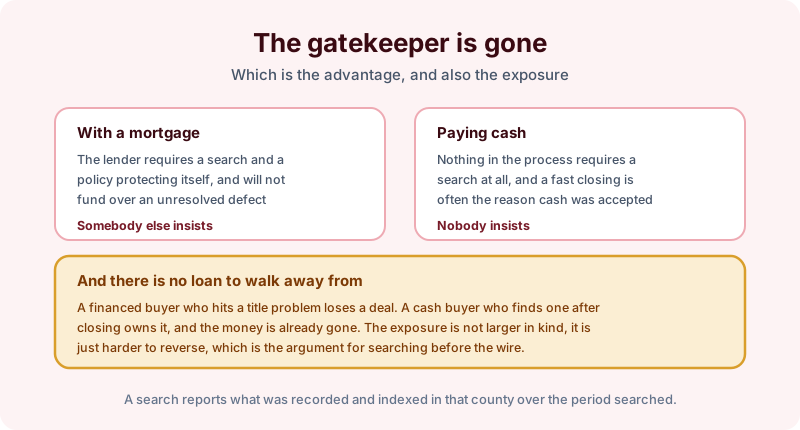
In a financed purchase the title work happens because somebody with money at risk requires it. Take the loan out of the transaction and that requirement disappears with it. Paying cash does not reduce the title risk; it removes the party who was checking — and it removes the option of walking away from a loan when something turns up.
Nobody else is checking
A lender orders a search, requires a policy protecting its own interest, and refuses to fund over an unresolved defect. None of that exists in a cash deal. Speed is frequently the reason the seller took the cash offer, which adds pressure in exactly the wrong direction.
This is the same structural gap our note on buying a home without an agent describes on the representation side, and cash buyers often have both gaps at once.
What to order
The record work is ordinary; only the reason for doing it has changed. Confirm the record owner and how title is held, which matters when the seller is an estate, a trust, or one of several heirs. Run mortgages, judgments, tax liens, and assessments, since anything recorded and unreleased is a claim against the property you are about to own outright. Read the easements and restrictions, and check the legal description against the tax parcel.
On multi-parcel property that last step earns its keep, because a description covering three of four parcels is a common defect and there is no lender’s examiner to catch it.
Where cash deals go wrong
Three patterns recur. A paid-off mortgage nobody released, which is not a debt but is a cloud that will surface when you sell. An estate sale where not every heir signed, leaving an outstanding interest. And a quitclaim in the recent chain, which conveys whatever the grantor had and promises nothing about what that was.
The common thread is that none of these stops a cash closing. They stop the next one, when you are the seller and the buyer’s lender finds what nobody looked for.
Auction and off-market purchases concentrate all three risks, because the seller may have no idea what is recorded and there is rarely time to find out afterward.
The policy question is separate
A title search and title insurance answer different questions, and the distinction is covered in title search versus title insurance. Briefly: the search tells you what the record shows; a policy is a contract about what happens if something outside it turns out to be wrong. A cash buyer who declines a policy should at least know what the record says, and should also read what a title search cannot find, because the unrecorded gap is where a policy earns its price.
The bottom line
Order the search before the wire, not after, and treat the absence of a lender as the reason to do it rather than a reason to skip it. Most reports come back inside a day. Order online, or ask us to match the scope to how the seller is holding title.