

· AFX Research
Title Search for a Ground Lease or Land Lease
On leased land, one party owns the dirt and another owns the building. Why two searches are needed rather than one, what the recorded memorandum will and will not tell you, and what decides whether the leasehold is financeable.
Table of Contents
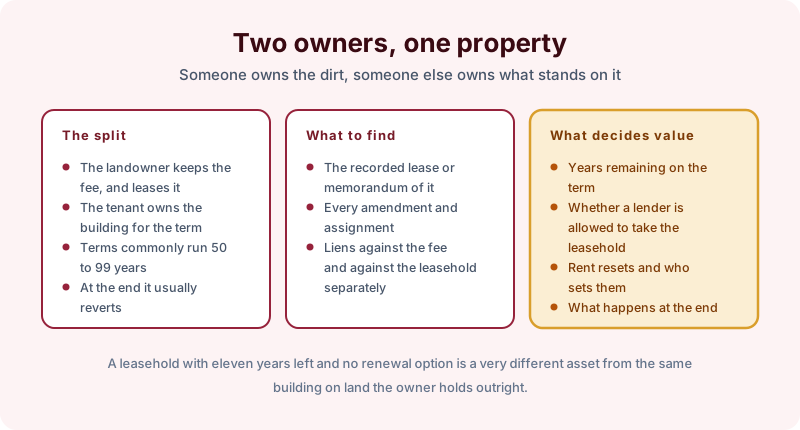
Most property questions assume one owner. A ground lease breaks that assumption in a way that changes everything downstream. The landowner keeps the fee and leases the ground for decades; the tenant owns the building standing on it for the length of the term. Two distinct interests, two sets of liens, and two searches rather than one.
What the arrangement actually is
Terms typically run fifty to ninety-nine years. The tenant builds and owns the improvements, pays ground rent, and at the end of the term the improvements usually revert to the landowner unless the lease says otherwise. It is common on urban commercial sites, on land held by institutions that will not sell, and on tribal and some government land.
The consequence people miss is that a leasehold is a wasting asset. Every year it is worth slightly less, and near the end of a term it can be worth very little regardless of the building’s condition.
What to find in the record
Full commercial leases are rarely recorded. What gets recorded is a memorandum of lease, a short instrument naming the parties, the premises and the term without publishing the rent. That memorandum is what a search finds, and it establishes the existence and duration of the leasehold rather than its economics.
Alongside it, look for every amendment and assignment, because terms get extended and leaseholds get sold. Look separately for liens against the fee and liens against the leasehold, since a mortgage on one does not encumber the other. And look for a subordination or nondisturbance agreement, which is what protects a leasehold lender if the fee owner’s own lender forecloses.
What decides whether it works
Four questions do most of the deciding, and none of them are in the memorandum.
- Years remaining. Lenders generally want the term to outlast the loan by a comfortable margin.
- Whether the leasehold can be mortgaged. Many ground leases permit it and set conditions; some do not permit it at all.
- Rent resets. A lease that resets to market every ten years carries a risk a fixed-rent lease does not.
- What happens at the end. Reversion, renewal option, or purchase option are three very different outcomes.
Those live in the lease itself, so the search tells you a ground lease exists and the document tells you whether it is worth having.
What to order
Ask for a search of both interests, name the parties on each side, and ask for the memorandum and every amendment in full rather than a summary. Then get the lease from the seller, because the recorded documents will not substitute for it. It is a similar two-source exercise to a manufactured home on leased land.
The bottom line
A building on leased land is a perfectly ordinary asset as long as everybody knows which interest they are buying and how long it lasts. A leasehold with eleven years left and no renewal option is a different asset from the same building on owned land. Order online, or ask us what a search on that address would cover before you commit.