

· AFX Research
Mortgage Assignments and Your Title Search
Your mortgage has probably been sold, and the record may or may not show it. What an assignment actually does, why the recorded chain has gaps by design, and when those gaps matter to you.
Table of Contents
Loans get sold. Yours may have changed hands three times since closing, and the company you send money to might be servicing it for somebody else entirely. Some of those transfers reach the county record and some of them never do, and the difference matters most at the two moments you care about, which are payoff and release.
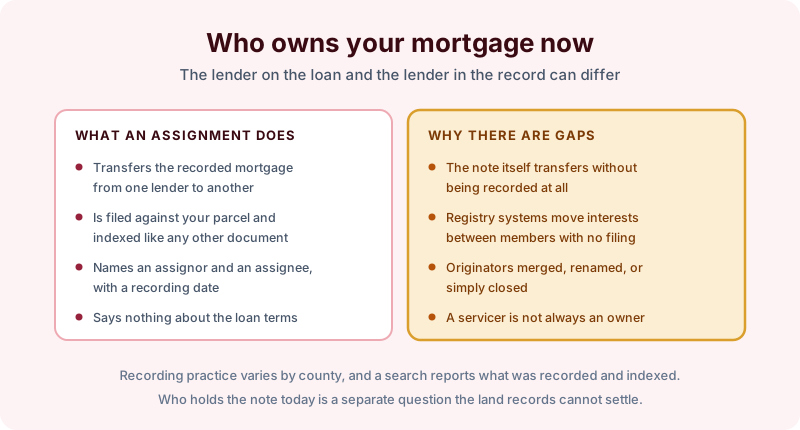
What an assignment actually does
An assignment of mortgage transfers the recorded security instrument from one lender to another. It is filed against your parcel, indexed like any other document, and names an assignor, an assignee, and a recording date.
That is all it does. It says nothing about your rate, your balance, or your payment. It is a change of address for the lien, not a change to the loan.
Why the chain has gaps by design
The promissory note is a separate document from the mortgage, and it transfers by endorsement and delivery without anyone recording anything. Registry systems compound this, holding the mortgagee position in the record while beneficial interests move between members with no county filing at all.
Add originators that merged, were renamed, or simply closed during the 2000s, and you get a recorded chain that is genuinely incomplete rather than defective. A servicer is also not necessarily an owner, which is why the company on your statement may appear nowhere in the record.
When it actually matters to you
Most of the time it does not, and you can ignore the whole subject. Three situations change that.
- Getting a payoff or a release. You need whoever currently holds the recorded interest to file the satisfaction. A chain that stops at a defunct originator makes that harder, in the same way an unreleased paid-off mortgage does.
- Selling or refinancing. A gap gets flagged in underwriting and has to be cured before closing, which takes time nobody has budgeted.
- Facing foreclosure. In many states the party filing has to show a recorded chain reaching itself, so the assignments become the whole argument.
What to check in the report
Pull every assignment in order and look at the dates rather than just the names. The assignee on one should be the assignor on the next. Where it is not, you have a missing link, a corporate name change, or an error, and all three are findable.
Then check for a recorded satisfaction or release against any mortgage you believe is paid. Paid off and released are different states, and only the second one is visible to a future buyer. If something looks wrong, our note on errors found in a title search covers the usual fixes.
The bottom line
An incomplete assignment chain is normal, not alarming, and it becomes a problem only when you need somebody specific to sign something. Find out before you need it. Order online for a certified search of your parcel, or ask us what the search would and would not cover first.