

· AFX Research
Title Search for a Property With a Well and Septic
Water coming in and waste going out both need somewhere to be, and on many rural parcels one or both depend on a right nobody ever recorded. What the search finds, and what the health department holds instead.
Table of Contents
On a rural property the well and the septic field are as much a part of what you are buying as the roof. Both need a legal right to occupy the ground they sit on, and on a surprising number of parcels one or the other sits partly or wholly on somebody else’s land under an arrangement that was never written down.
What should be recorded
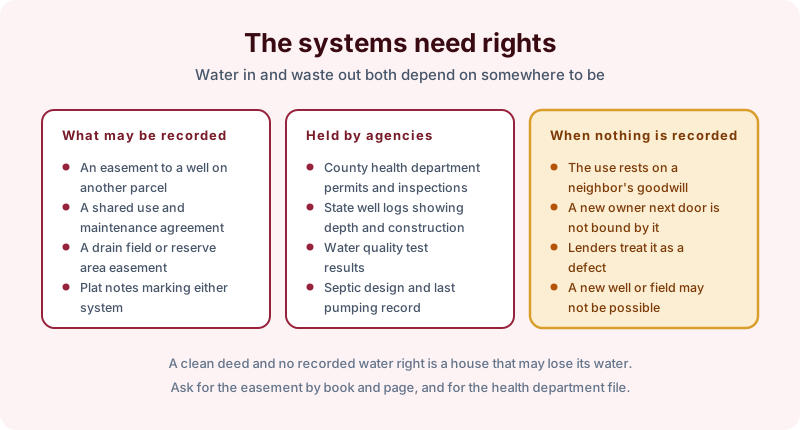
An easement to a well located on another parcel. A shared use and maintenance agreement where two or more households draw from one source. A drain field easement, including the reserve area for the replacement field that will eventually be needed. Plat notes marking either system.
Any of these is a real property right that survives a sale. What matters is that it names your parcel as benefited — an easement running to the lot next door does nothing for you.
What the agencies hold
Everything about whether the systems work. County health department permits and inspection records. The state well log showing depth, construction and yield. Water quality test results. The septic design, its permitted capacity and the last pumping record.
None of that is in the land record, so order the title search and request the health department file in the same week. The file takes longer to arrive and answers a different question.
When nothing was recorded
This is the situation that stops a sale. A shared well used by two neighbors for thirty years under an informal understanding binds nobody once either property changes hands. A new owner next door is not bound by a promise he never agreed to and could not have found.
Lenders treat an unrecorded water right as a collateral defect. The remedy is to negotiate and record an easement before closing, which is straightforward while everyone still wants the deal and very hard afterward.
The reserve area people forget
Septic permits almost always require a reserve area — ground set aside for the replacement field, because the first one will eventually fail. On a parcel where the original field already sits at the edge of the buildable area, the reserve may have been located on adjoining land, or on ground the current owner has since built a garage on.
A buyer who finds this after closing has a property that cannot be permitted for a replacement system once the existing field fails. The reserve is sometimes shown on a recorded plat and more often lives only in the health department file.
What to look for in the chain
Signals that the systems are shared or off-parcel. A lot with no visible water source. A drain field drawn on a neighbor’s survey. A narrow access strip serving no obvious purpose. Deeded acreage that does not match what the fence lines suggest. Any of those is a reason to ask rather than assume, and it is the same discipline described in title search for vacant land.
The bottom line
A clean deed with no recorded water right is a house that may lose its water the next time the neighbor sells. Ask for the easement by book and page rather than for reassurance. Compare the available searches and order online, or ask us how to scope a rural parcel first.