

· AFX Research
Title Search for Waterfront Property with a Dock
On most waterfront the deed stops at the water and the dock stands on ground you do not own. Where the property line actually ends, what the dock depends on, and which of it a county records search can and cannot reach.
Table of Contents
A waterfront listing shows a dock, the photographs sell the house, and the buyer assumes the dock comes with it. Very often the deed stops at the water’s edge and the dock sits on submerged land owned by the state. What you are buying in that case is not the structure but a set of permissions to have one, and permissions behave differently from property.
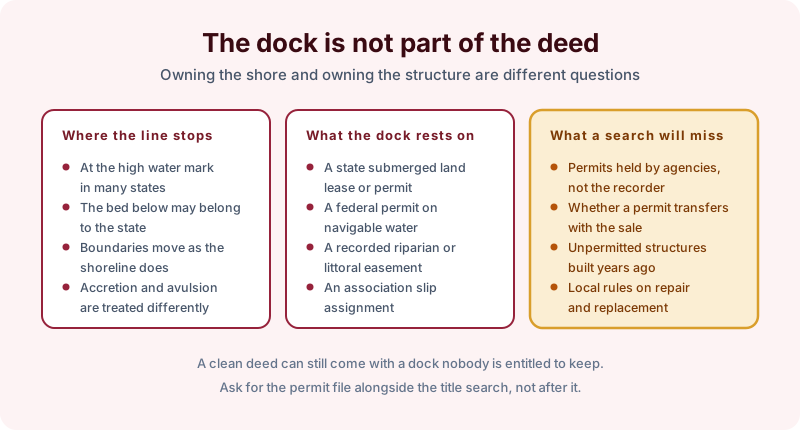
Where the property line stops
In most states the private boundary runs to the mean high water mark on tidal water, or to the ordinary high water mark on a navigable lake or river, and the bed beyond that belongs to the state in trust for the public. A few states convey to the low water mark, and rules on inland non-navigable water differ again.
The line also moves. Gradual accretion generally belongs to the upland owner, while a sudden avulsive change usually does not, so a shoreline that has shifted over decades can leave the deed describing a boundary nobody can point to.
What the dock actually rests on
Usually one or more of four things. A state submerged land lease or permit. A federal permit where the water is navigable. A recorded riparian or littoral easement, which is the one a title search will actually find. Or, in a planned community, a slip assignment from an association.
These carry terms, renewal dates and transfer conditions. A permit issued to the current owner does not always pass to a buyer automatically, and some are personal to the holder.
There is a fifth possibility worth ruling out early, which is that the dock rests on nothing at all. Structures built before the current permitting regime, or built without asking, are common on older lakefront, and they are usually discovered when somebody applies to repair one.
What a records search reaches
A title search covers what has been recorded and indexed in the county. That means the deed, the legal description, recorded easements, restrictive covenants, association documents, mortgages and liens found of record. If a riparian right was conveyed by a recorded instrument, it shows up.
Recorded covenants deserve particular attention here. A shoreline subdivision frequently restricts dock size, shared use, boat type and even mooring, and those restrictions are enforceable by the neighbors regardless of what any agency permits. This is the same mechanism described in deed restrictions and your title search.
It does not reach agency files. State and federal permits live with the issuing agency, not the recorder, so a clean title report says nothing about whether the dock is permitted. Nor will it reveal an unpermitted structure built thirty years ago, or local rules limiting repair and replacement — which matter enormously, since many jurisdictions allow an existing nonconforming dock to be maintained but not rebuilt after storm damage.
The bottom line
Waterfront buyers should treat the dock as a separate diligence item from the house. Order the title search for the recorded picture, and ask the seller for the permit file in the same week rather than after closing, because the two answers only make sense together. Compare the available searches and order online, or ask us what a search on that parcel would cover first.