

· AFX Research
Title Search on New Construction: What to Check
Nobody has ever owned the house, which makes buyers assume the title is spotless. The lot has a record of its own, and the riskiest item on it is a lien that has not been filed yet.
Table of Contents
Buying new construction feels like it should simplify the title question. No previous owner, no decades of liens, no estate to untangle. The house is new and the land is not, and the paperwork behind a new subdivision lot is busier than most resale files. Three items deserve attention, and one of them is not in the record at all yet.
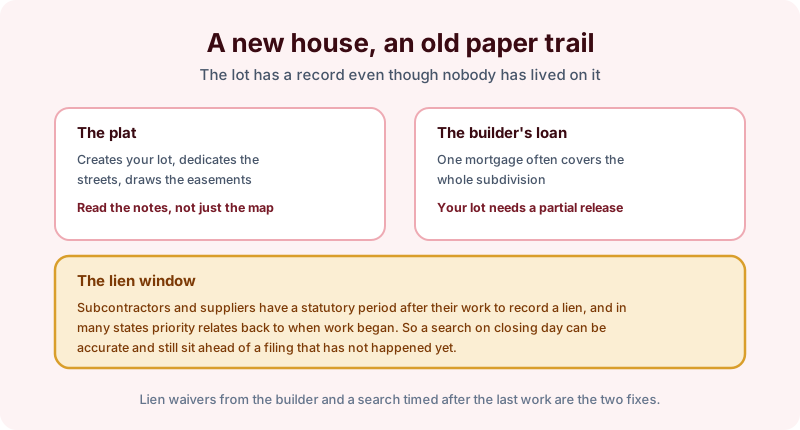
The plat is the founding document
Your lot exists because a plat was recorded. That map created the lot lines, dedicated the streets, and drew the utility and drainage easements along your boundaries, typically before a shovel went in the ground.
Read the notes on it, not just the drawing. Plat notes can restrict fences, require drainage patterns to be maintained, or limit structures, and setback lines are not easements even though they share the page. The recorded declaration of covenants for the community is a separate instrument and usually a long one.
The builder’s financing has to come off
Builders borrow against whole subdivisions. One construction mortgage frequently covers every lot in the phase, and it stays recorded against your lot until the lender files a partial release for it.
That release is routine and it does get missed, particularly on the last few lots in a phase or when a builder runs into trouble mid project. A search confirms whether it was recorded, and closing without it means taking title subject to a lender’s blanket lien on the whole development. Ask the same question about any recorded development agreement or bond securing the streets and utilities, since those can obligate lot owners after the builder walks away.
The lien that has not been filed
This is the real exposure, and it is the one a search cannot fix on its own.
Subcontractors and suppliers have a statutory period after their work to record a mechanic’s lien, and in many states the priority of that lien relates back to when work began rather than when it was filed. So a search run the morning of closing can be entirely accurate and still be followed by a filing that takes priority. Our note on what a search cannot find covers the general shape of this.
The practical answers are lien waivers from the builder and every major sub, a search timed as late as possible, and a title policy. Which of those your state and your lender require is a question for the closing agent.
The bottom line
Order the search on the lot rather than assuming a new house means a clean record, confirm the partial release of the construction loan, and read the plat and the declaration before you sign. Order online, or ask us with the address, the county, and the builder’s name and we will scope it. Our products list the available depths, and a current owner search is usually the right starting point on a lot with a short history.