

· AFX Research
Title Search When the Owner Is Under a Guardianship
When a guardian or conservator signs a deed, the authority behind that signature lives in a court file and only sometimes reaches the recorder. Here is what a title search can see, what it cannot, and why the gap matters.
Table of Contents
When an owner can no longer manage their own affairs, a court appoints someone to do it for them, and that person may end up selling the house. The deed looks ordinary. The question a title search can help with is whether the authority behind the signature ever reached the public record — and on this one, the record is frequently quieter than the transaction deserves.
Where the authority actually lives
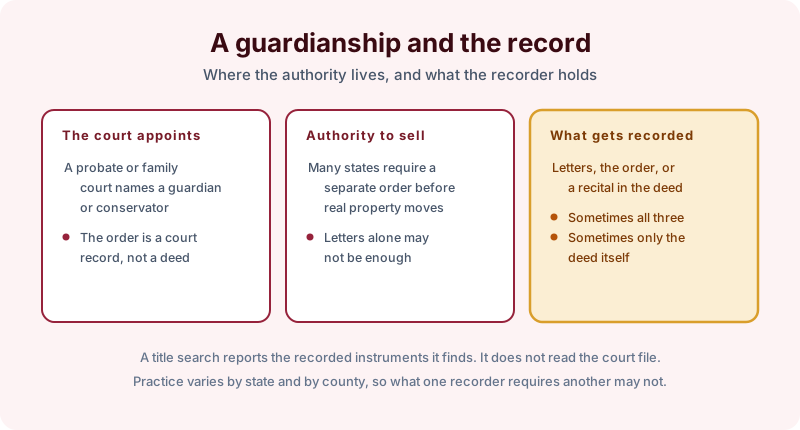
A probate or family court appoints a guardian, a conservator, or in some states a person holding both roles under a different name. That appointment is a court record. It sits in a case file with the petition, the medical findings, the bond and the inventory, and none of that is filed with the county recorder as a matter of course.
Many states then require something more before real property can be sold. A separate order authorizing the sale, sometimes with notice to interested parties, sometimes with a court confirmation after the fact. Letters of guardianship alone do not always carry the power to convey.
What reaches the recorder
Three things show up, in various combinations. Certified letters recorded alongside the deed. A copy of the order authorizing the sale. Or nothing beyond a recital inside the deed itself, where the grantor is described as guardian for a named person and the order is referenced by case number and date.
A title search finds whatever was recorded and reports it with the document attached. It does not pull the court file, and it does not evaluate whether the guardian did what the court required. Practice varies by state and by county, so a county that insists on recorded letters is sitting next to one that never asks. That inconsistency is why a guardian’s deed recorded with nothing attached is common rather than alarming, and also why it cannot be read as proof that a court approved anything.
Why the gap matters to a buyer
A deed signed without the authority the state required is a defect that can surface years later, usually when the protected person dies and an heir reads the file. Title insurers underwrite these transactions carefully for that reason, and a buyer looking at a sale from a guardianship should expect questions rather than be surprised by them. An heir who challenges the sale later is attacking the authority, not the signature.
The same structure appears with power of attorney deeds, where the signature is ordinary and the authority behind it is the thing worth checking.
The bottom line
Order the search to see what was recorded, then ask the closing agent or an attorney to confirm the court file matches it. We can tell you what is in the record within a day. Whether it is sufficient is a legal question for counsel in that state. Order online, compare the search products, or ask us what a search of that property would cover before you commit to anything.