

· AFX Research
What Is a Two-Owner Search, and When Do You Need One?
A two-owner search reaches back through the previous owner's deed, not just the current one. Here's the extra transfer it surfaces, who asks for it, and how it sits between a current owner search and a full chain of title.
Table of Contents
Most buyers ask one of two questions about a title search: is the cheap one enough, or do I need the expensive one? There’s a third answer that gets overlooked, and for a lot of transactions it’s the right one: a two-owner search buys you one more transfer of history for a fraction of the cost of a full chain.
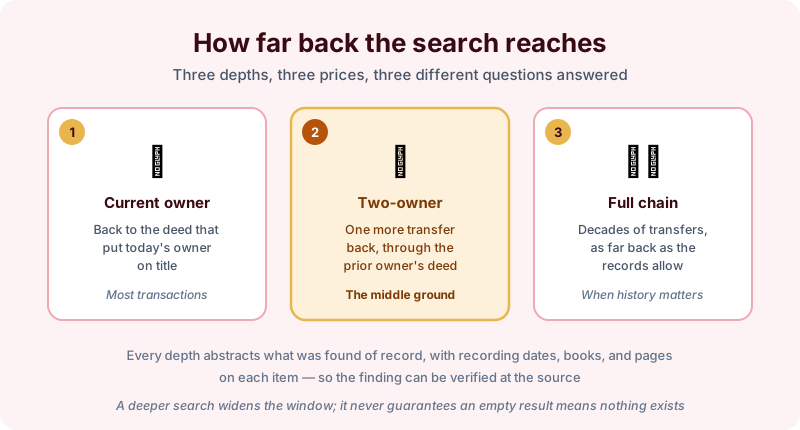
What the extra owner adds
A current owner search is abstracted back to the deed that put today’s owner on title. Everything recorded during their ownership shows up. Everything before it is outside the window.
A two-owner search moves that boundary back one transfer, through the deed that put the previous owner on title. That covers the seller before this one, and the encumbrances recorded during their tenure.
Why the previous owner matters
The gap a current owner search leaves is narrow but real, because not every defect is cleared at closing:
- Unreleased liens. A mortgage or judgment paid off during the prior ownership stays of record until a release is recorded. If nobody followed up, it’s still there.
- Deed problems. A defective legal description, a missing signature, or a break in the chain enters at the transfer itself, which is exactly the event a current owner search stops at rather than examines.
- Short holding periods. When the current owner bought two years ago, a current owner search covers two years. That’s a thin history for a property worth several hundred thousand dollars.
Who typically orders one
Investors and flippers, where the current owner has held the property briefly and the interesting history sits with the seller before them. Lenders who want more than a current owner search without paying for decades of research. And foreclosure and auction buyers, where the transfer into the distressed owner is often where the trouble started.
When to go all the way back
A two-owner search is a wider window, not a complete history. If the concern is an old easement, a restrictive covenant, a mineral reservation, or a break in the chain from decades ago, that calls for a full chain of title instead. Quiet title work and disputed boundaries generally need the full history.
It’s also worth being clear about what any depth of search does: it reports what was found of record in the county searched, as of the date searched. A wider window finds more, but an empty result is not proof that nothing exists.
The bottom line
Match the depth to the risk rather than to the budget. If the current owner has held the property a long time and the deal is ordinary, a current owner search is usually sufficient. If they bought recently, or the price makes a surprise expensive, the second owner is cheap insurance against the most common gap. See what each report includes, order online, or ask us which depth fits your transaction before you buy.