

· AFX Research
Bankruptcy and Your Title Search
A bankruptcy case sits in a federal court file, not in the county recorder's index, and a discharge is not a lien release. Here is what a records search on the property can actually show you, and what it cannot.
Table of Contents
Someone in the chain filed bankruptcy, and now the question is what that did to the title. A county records search will not find the case, and it will find the consequences. Those are two different things, and treating them as one is where buyers get into trouble.
The case itself is somewhere else
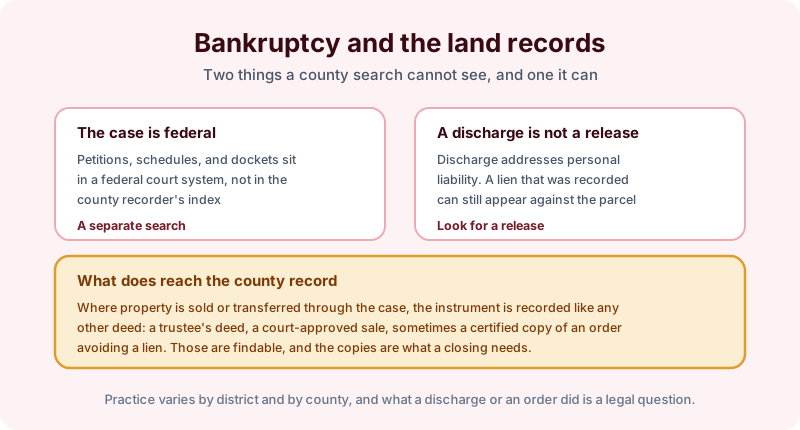
Bankruptcy is federal. Petitions, schedules, claims, and orders live in a federal court system with its own index, organized by debtor name. The county recorder holds instruments affecting land. A search of the land records is not a search of that court file, and no amount of depth on one substitutes for the other.
Practically, that means you need the debtor’s name and, ideally, a case number from the seller. Asking for it is normal, and a seller who cannot produce it is telling you something useful.
A discharge is not a release
This is the misunderstanding that costs the most money. A discharge addresses personal liability for a debt. It is not, by itself, a document that removes a recorded lien from a parcel.
So a search can turn up a mortgage or a judgment that everyone believed was wiped out, still sitting in the index with nothing recorded after it. Sometimes the lien really was dealt with in the case and nobody ever recorded the paperwork. Sometimes it was not. The record cannot tell you which, and the answer is a legal one. What the record can do is show you exactly what is there, with copies, which is what your closing agent and your attorney need to work from. The same pattern shows up with ordinary judgment liens.
What does reach the land records
Plenty, when property changed hands through the case. A trustee’s deed, a court-approved sale, a certified copy of an order affecting the parcel, a release recorded after a lien was resolved: all of those are recordable instruments, and where they were recorded, a search finds them.
That makes the chain of title the useful place to look. A deed out of a bankruptcy estate is a normal link, and the question is whether the instruments around it are complete: the order authorizing the sale, the deed itself, and releases for whatever was supposed to come off.
Timing matters more than usual
A case filed last month may not be reflected in anything recorded yet, and recording lag varies by county. A search reports the record as of its date, so on an active or recent case, the date of the report is part of the answer, not a footnote to it. This is the general limitation covered in what a title search cannot find.
The bottom line
Order the search on the property and get the copies, then hand the recorded instruments to counsel with the case number. That division of labor works. Reading a clean report as proof the bankruptcy resolved everything does not. Order online, or ask us what scope fits if there is a trustee sale in the chain.