

· AFX Research
Code Enforcement Liens and Your Title Search
Municipal code violations can turn into recorded liens that survive a sale — and open cases often live only in city files. Here is where they show up in a title search, and where they don't.
Table of Contents
A code enforcement lien is one of the few encumbrances that starts with a mowing crew or a building inspector rather than a lender. The violation itself is a municipal matter, but once the fines are recorded or certified to the tax roll, they attach to the property and follow it to the next owner. That two-step path is exactly why these liens surprise buyers.
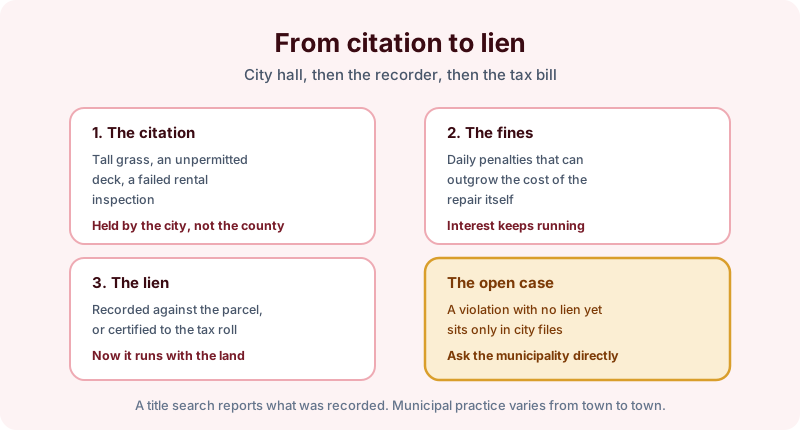
How a violation becomes a lien
It usually begins small: tall grass, an inoperable vehicle, an unpermitted deck, a failed rental inspection, a boarded window. The municipality issues a citation with a cure period. If nothing happens, daily fines begin to accrue, and in many towns they keep accruing long after the underlying condition is fixed.
At some point the municipality converts unpaid fines into a lien. Some record an instrument in the county land records. Others certify the balance to the property tax roll, where it rides along with the annual bill. A few do both. Which route a town takes decides whether a title search will see it at all.
What a title search finds
A search of the county land records will report a recorded municipal or code enforcement lien like any other encumbrance, with the recording data and a copy of the instrument. Where the balance was certified to the tax roll instead, it typically surfaces as part of the tax status rather than as a separate lien, which our post on property taxes in a title search covers in more detail.
Two related items often turn up alongside them:
- Demolition and nuisance abatement liens. When a city boards, mows, or tears down, the cost is commonly assessed against the parcel.
- Special assessments. Sidewalk, sewer, and paving charges are not violations, but they encumber the property the same way.
The gap worth knowing about
An open violation with no lien yet is invisible to the county record. There is no instrument to find, and no index that connects the citation to the parcel. The same problem applies to permits that were never closed out, which is the subject of our post on unpermitted additions.
That is a real limit, and it is worth stating plainly rather than assuming a clean report means a clean file at city hall. If the property shows deferred maintenance, a recent flip, or a long vacancy, call the code enforcement office and the building department directly and ask for the address history. Practice varies from town to town, and some will answer in a phone call while others want a written records request.
The bottom line
Recorded code enforcement liens behave like any other lien: they survive a sale, they generally have to be paid or negotiated, and they are frequently larger than the repair that triggered them. A title search tells you what has been recorded against the parcel; the municipality tells you what is still open. You want both before closing.
Our abstractors pull the recorded liens, assessments, and tax status together in one report, usually the same day. Order online, or ask us what a search on a particular address would cover before you commit.