

· AFX Research
How Long Is a Title Search Good For?
Nothing on the report expires, but the public record keeps moving underneath it. What a search fixes as of its effective date, what can land in the gap, and how close to the closing it ought to be run.
Table of Contents
People ask this expecting a number, and the honest answer is that a title search has no shelf life at all. It is a snapshot of the public record as of a stated date, and it stays accurate about that moment forever — the difficulty is that the moment keeps receding while the record carries on without it.
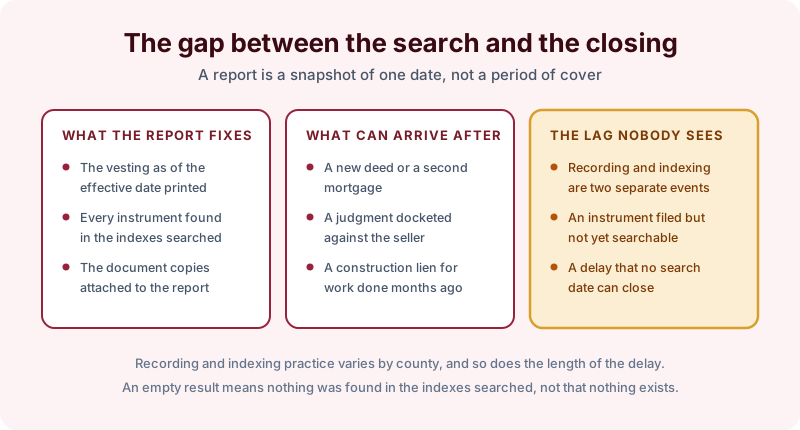
A report is dated, not warranted
Every competent search carries an effective date, which is the point through which the indexes were examined. Everything the report says is a statement about that instant. It is not a period of coverage and it does not quietly stop being valid — it simply stops being current.
That distinction is most of the answer. Nobody can tell you a search is good for thirty days, because whether it is depends entirely on what happened during those thirty days.
What can land in the gap
- A conveyance. The seller deeds the property to somebody else, or adds a name to it.
- A new loan. A second mortgage or a home equity line recorded quietly between contract and closing.
- A judgment. Judgments attach to people, so one docketed against the seller after your search can reach the property while it is still in their hands.
- A construction lien. Harder than the rest, because in many states it takes its priority from work performed before your search ever ran, as covered in mechanic’s liens and your title search.
Why even a same day search has a blind edge
Recording and indexing are two separate events. An instrument handed to the recorder on Monday may not be searchable in the grantor and grantee index for days, and in some offices longer. A search run Tuesday afternoon is examining what has been indexed, not everything the office has received.
Nothing eliminates that gap. Recording and indexing practice varies by county and so does the delay, which is one reason a report tells you what was found in the indexes searched rather than claiming a complete inventory of the property. The practical effect is usually small, and it is still better understood beforehand than discovered at the closing table.
How close to closing it should be
Practice varies by lender, by state and by transaction, and your closing agent or counsel sets the standard that applies to your file. As a working habit, the shakier the counterparty and the more recent the construction, the shorter the gap you want between the effective date and disbursement. Most current owner searches come back in under a day, so a short gap is usually a scheduling decision rather than a cost one.
When in doubt
Read the effective date on the report, count the days between it and your closing, and decide whether you are comfortable with whatever could have been recorded in between. Order online when you want a current search, or ask us how close to your closing date we can date one.