

· AFX Research
Title Search for a HELOC or Home Equity Loan
A second-lien lender is buying whatever equity is left after everything ahead of it. What the search confirms, the findings that shrink your borrowing room, and why an old line of credit with a zero balance still matters.
Table of Contents
Borrowing against equity means bringing in a lender who will sit behind your existing mortgage. Their whole risk model rests on knowing exactly what sits ahead of them, and the title search is how that gets established. It is a narrower question than a purchase search and it turns up the same surprises.
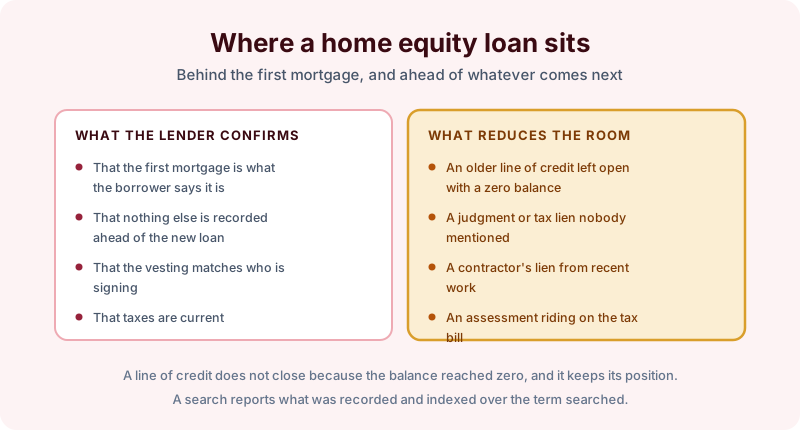
What the lender is confirming
Four things, mostly. That the first mortgage is what you say it is, in the amount and position you say. That nothing else is recorded ahead of the new loan. That the vesting on the deed matches whoever is signing. And that the property taxes are current, since tax liens generally outrank everything.
None of that is about your credit. It is about the property, and it is why a search happens even when the borrower is well known to the bank.
What quietly shrinks your borrowing room
- An old line of credit left open. A HELOC does not close because the balance hit zero. It stays recorded, keeps its position, and counts against your available equity until it is formally closed and released.
- A judgment or tax lien. Sometimes genuinely forgotten, sometimes belonging to a different person with a similar name, which takes identifying information to clear.
- A contractor’s lien. Recent renovation is a common source, and it is exactly the work the new loan is often meant to pay for.
- An assessment on the tax bill. Property assessed financing for solar or efficiency work attaches to the parcel, as covered in solar panels and your title search.
Each of these is cheaper to find now than three days before closing.
Vesting has to match
If the deed says something the loan application does not, the file stops. A name that changed, a spouse added or removed, a transfer into a trust, or a deed that was signed and never recorded will all do it. So will a co-owner who is not part of the application, since a lender generally wants everyone on title to sign.
Where the property is held in a trust or an entity, expect extra documentation. Our note on property owned by an LLC or trust covers what the record shows there.
Order it early
The instinct is to treat title as a closing step, and on a second-lien file that is backwards. Every finding above needs time to resolve, and a release from a lender that has since merged or closed can take weeks. Ordering when the application goes in turns a crisis into an errand, in the same way a title search before listing your home does.
The bottom line
A home equity lender is buying the space between your first mortgage and your property’s value, and the search is what measures that space honestly. Recording practice varies by county, and an empty result means nothing was found in the indexes read rather than that nothing exists. Order online for a certified search of your parcel and the names on it, or ask us what the search would and would not cover first.