

· AFX Research
Mechanic's Liens and Your Title Search
A contractor's claim can be recorded months after the work and still take its priority from the day the first shovel went in. How construction liens reach the record, and the window where a search finds nothing.
Table of Contents
A mechanic’s lien is the one encumbrance that can appear on a property after you have already searched it and still outrank the mortgage you recorded in the meantime. In a number of states the lien takes its priority from the day work began rather than the day the claim was filed, which turns a recent remodel into a title question long after the dust has settled.
What a construction lien actually is
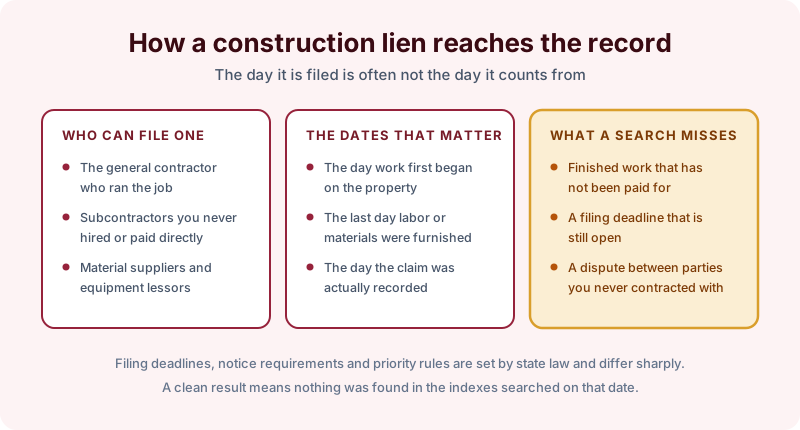
It is a statutory claim against the property itself, filed by someone who supplied labor or materials and was not paid. General contractors file them. So do subcontractors and suppliers who never had a contract with the owner at all, which is why paying your general contractor in full does not necessarily end the exposure. The name varies — mechanic’s lien, construction lien, materialman’s lien — and so does nearly everything about how the statute works from state to state.
Why the recording date is not the whole story
Most liens take their place in line from the moment they reach the record. A construction lien frequently does not. Many states let it relate back to the date work first began on the property, or to the date that particular claimant started, so a claim recorded in November can sit ahead of a mortgage recorded in September.
That cuts the same way for lenders and buyers. A search reports what is recorded and indexed today. It cannot show a claim that has not been filed yet but will, once filed, reach backward past your interest. Where a particular lien actually lands is a legal question for counsel rather than a finding an abstractor makes.
The window where a search finds nothing
Every state gives claimants a deadline measured from something — last work, completion, a recorded notice — and that period is commonly a matter of months. Inside it, a property can carry an unpaid balance with nothing in the record to show for it.
This is the clearest example of the point in what a title search cannot find. A clean report means nothing was found in the indexes searched as of that date. It is not evidence that nobody intends to file.
What to look for before closing
- Recent construction. Fresh work on a new build or a heavy renovation is the trigger. If the kitchen is three months old, ask who did it and whether they were paid.
- Notices in the record. Some states record a notice of commencement near the start of a job, and where that practice exists the filing is a useful flag.
- Lien waivers. Unconditional waivers from the general contractor and from every sub and supplier are the practical defense, and they belong in the file before funds move.
- A recently dated search. Most current owner searches come back in under a day, so there is rarely a reason to rely on one that is weeks old.
The bottom line
Search the property, then treat recent construction as a separate question the record may not have caught up with. Waivers and a freshly dated search do more here than anything else. Order online for a current owner search, or ask us what a search on a recently renovated property would and would not cover.