

· AFX Research
Life Estates and Your Title Search
A deed that reserves a life estate splits the property between the person living there and the people who inherit it, and a sale needs all of them. What the record shows, and the gap that appears after a death.
Table of Contents
A life estate is created by one sentence, usually in a deed from a parent to adult children, and it divides ownership of the house in a way that a casual look at the record misses entirely. The person living there is not the sole owner, and the people who will own it outright someday already own something today. Both facts matter the moment anybody wants to sell or borrow.
What the deed did
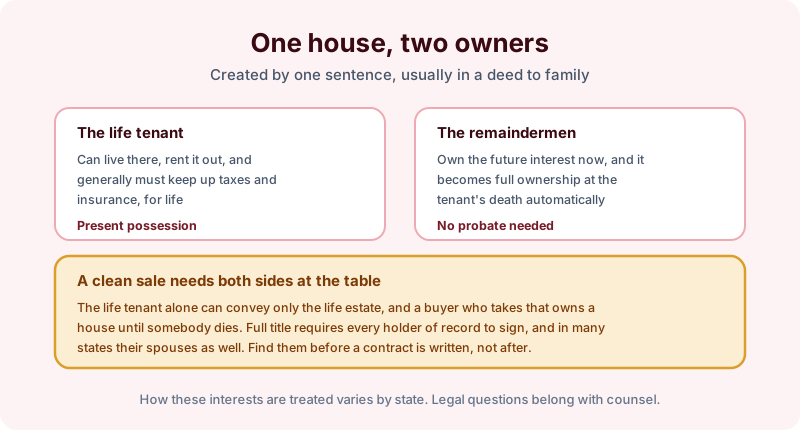
Look for a reservation, typically phrased as reserving unto the grantor a life estate, or a grant to one person for life with the remainder to others. The life tenant gets present possession: they can live in the property, rent it, and are generally responsible for taxes, insurance, and upkeep. The remaindermen get a present interest in the future, which becomes full ownership at the life tenant’s death automatically, with nothing filed and no probate.
These arrangements are common in estate planning, which is why they turn up alongside the fact patterns in title search on inherited property.
Who has to sign
Everybody. A life tenant selling alone can convey only the life estate, and a buyer who accepts that has purchased a house they may have to give up when a stranger dies. Reaching full title requires every holder of record, and in many states their spouses too.
That is a practical problem rather than a legal one. Remaindermen are often several siblings in several states, one may have died and left their share to their own heirs, and one may simply refuse. Identify them from the record before a contract is written, because the list is not negotiable and finding it late is what kills these deals.
When the life tenant has already died
Here the record produces something that looks like a defect and is not. The chain shows a deed into the life tenant and the remaindermen, and then nothing. There is no deed out, because the interest ended by operation of law.
What closes that gap is proof of death rather than a conveyance, usually a certified death certificate and often an affidavit, recorded in the county where the property sits. It is inexpensive and it is easy to overlook until a buyer’s underwriter asks, so handle it early. Reading how a report presents this is covered in how to read a title search report.
What the search will not decide
It reports what was recorded and indexed in that county over the period searched, with copies, which is exactly the information the signature list is built from: the deed that created the split, the parties named, and any later conveyance by either side.
It cannot tell you who is living today, identify unnamed members of a class such as “my children,” or resolve what a life tenant may do without the remaindermen’s consent, which varies by state. Those are questions for counsel. A light-warranty deed from one remainderman carries its own issues, covered in what a quitclaim deed means.
The bottom line
If a reservation of a life estate appears anywhere in the chain, build the list of every holder of record before pricing or contracting. Order online, or ask us to pull the vesting deed and identify the parties named in it.