

· AFX Research
What a Quitclaim Deed Means for Your Title Search
A quitclaim deed is a real deed that promises nothing about what it conveys. Here is what one in your chain tells you, what it does not clear, and the two things worth checking on either side of it.
Table of Contents
Quitclaim deeds get a bad reputation they only half deserve. They are valid instruments, recorded like any other deed, and millions of properties have one somewhere in the chain. What makes them worth a second look is not that they are defective — it is that they carry no promises, so the record on either side of them has to do the work the deed itself declines to do.
What it actually transfers
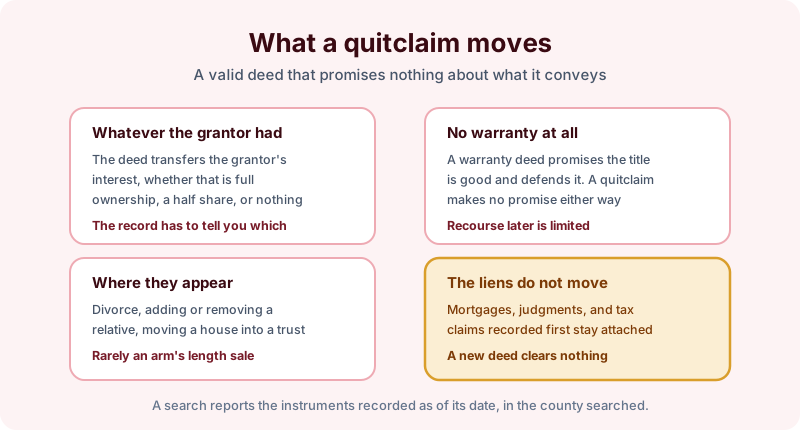
A quitclaim conveys whatever interest the grantor held at that moment, and no more. If the grantor owned the property outright, the grantee now does. If the grantor held a one-third interest, that is what moved. If the grantor held nothing — a common situation when a relative signs away a house they never owned on paper — the deed is still valid and transfers exactly nothing.
That is the difference from a warranty deed, which promises the title is good and obligates the grantor to defend it. A quitclaim makes no such promise, so a problem discovered later is generally the grantee’s problem.
Where they legitimately show up
Most quitclaims are ordinary family paperwork, not warning signs:
- Divorce, where one spouse deeds their interest to the other. Our note on inherited and family-transferred property covers the same territory.
- Estate planning, moving a house into a trust or an LLC.
- Adding or removing a name, often a new spouse or an adult child.
- Curative work, fixing a misspelled name or a bad legal description.
What is unusual is a quitclaim in an arm’s-length sale between strangers. A buyer paying market price normally receives a warranty deed, so a quitclaim there is worth understanding rather than assuming.
What it does not clear
This is where the misunderstanding costs money. A quitclaim moves ownership; it does nothing to liens. A mortgage, judgment, tax lien, or HOA claim recorded before the deed stays attached to the property, and the new owner takes it subject to all of them. Someone who received a house by quitclaim from a parent may get title and a decade of unpaid claims at once.
The deed also does not remove the grantor from a mortgage. Signing away ownership and being released from the loan are two separate acts.
What a search checks on either side of it
The useful work is sequential. Confirm what the grantor actually held by reading the deed that put them on title. Then run the record forward for everything recorded against the property and against each name in the chain, which is the ordinary output of a current owner search or a full chain of title. Where a quitclaim moved only a partial interest, the question becomes who holds the rest, and that answer is in the earlier instruments too.
A search reports what is recorded in the county searched as of its date. It cannot tell you whether a grantor understood what they signed, or whether an unrecorded agreement sits alongside the deed, which is part of what a title search cannot find.
The bottom line
A quitclaim in the chain is a prompt, not a defect. Read the deeds before and after it, price out the liens that survived it, and be more careful when one appears in a sale rather than a family transfer. Order online and we will pull the instruments and the liens together, or ask us what a search on your property would cover before you decide.