

· AFX Research
Lis Pendens and Your Title Search
A lis pendens claims no money and does not have to be large to matter, because it puts every later buyer and lender on notice of a lawsuit over the property. What the record shows, and why an old one is the finding we see most.
Table of Contents
Most encumbrances a search turns up have a number attached. A lis pendens has none, and it is often the single item that stops a closing outright — because it is not a claim for money, it is a warning that a court is about to decide something about the property.
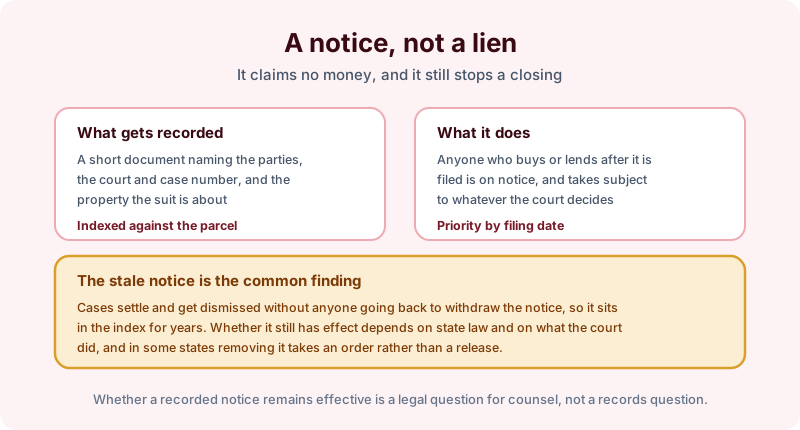
What actually gets recorded
The document itself is short: the parties, the court and case number, and a description of the property the suit concerns. It is recorded in the same land records as deeds and mortgages, so it is indexed against the parcel and shows up in a search of that parcel’s record. What it does not contain is the merits — nothing in the notice tells you who is likely to win.
Why a notice outweighs its size
Recording it fixes a date. Anyone who buys the property or lends against it afterward is treated as knowing about the suit, and takes subject to whatever the court ultimately orders. That is why a buyer’s lender will usually refuse to close over one: the exposure is not the plaintiff’s claim, it is the possibility that the deed being purchased gets unwound later.
Common sources are the ones you would expect from a records standpoint — foreclosure actions, partition and quiet title suits, divorce and probate disputes, specific performance claims by a thwarted buyer, and construction disputes running alongside a mechanic’s or judgment lien.
The stale notice is the usual finding
Far more often than an active case, a search surfaces a notice from a suit that ended years ago. Cases settle, get dismissed, or go to judgment, and nobody circles back to withdraw the notice. It stays in the index.
Whether an old notice still has legal effect depends on state law and on what the court actually did, and in some states clearing it requires a court order rather than a simple release. That is a question for counsel. What the search can tell you is precise and useful on its own: a notice exists, here is its recording date, here are the parties, here is the case number to pull.
What the search will and will not settle
A search reports what was recorded and indexed in that county over the period searched, with copies of the instruments found. It does not report the status of the lawsuit, which lives in the court’s docket rather than the land records, and it does not predict the outcome. An empty result means nothing was recorded, not that no dispute exists — the wider version of that point is in what a title search cannot find. Recording and indexing practice varies by county, so a notice filed under a misspelled party name is exactly the kind of item that gets missed by a name-only lookup.
The bottom line
If a property has any litigation history, search it before the money moves, and pull the notice itself rather than relying on an index entry — the recording date and the case number are what counsel needs. Most reports come back inside a day, as covered in how long a title search takes. Order online, or ask us to include the court indexes if a dispute is already known.