

· AFX Research
Title Search Before a Quiet Title Action
A quiet title complaint is assembled almost entirely from the land record, and the search is what makes it survive. What your attorney needs on the desk before anything is filed.
Table of Contents
A quiet title action asks a court to declare who owns a property and to extinguish whatever cloud is sitting on it. It is built almost entirely out of the land record, which means the search is not a preliminary step, it is most of the raw material. A thin search produces a thin complaint, and a complaint that misses an interest holder produces a judgment that does not bind them.
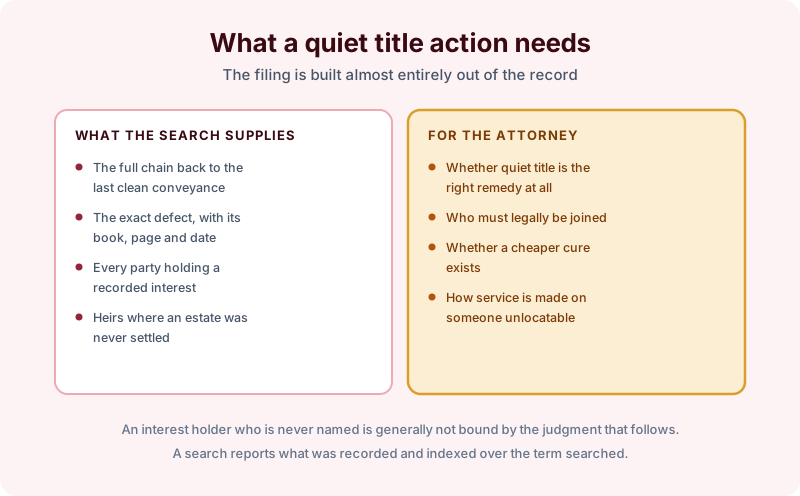
What the search has to establish
- The chain back to the last clean conveyance. Not the current owner, not two owners. The action is about a defect somewhere in the history, so the search has to reach past it.
- The defect itself, precisely. Book, page, date, and the exact wording. “There is an old mortgage” is not a pleading. The instrument is.
- Every party with a recorded interest. Lienholders, easement holders, mineral owners, and anybody in the chain whose signature was needed and missing.
- Heirs, where an estate was never settled. These are the ones that most often go unidentified, and they are the ones that unravel a judgment years later.
Why naming everyone matters so much
An interest holder who is never joined is generally not bound by the result. That is the whole risk. A quiet title judgment obtained without naming a lienholder leaves that lien exactly where it was, and the owner discovers it at the next sale believing the problem was solved.
The most common gap is an unprobated estate three generations back, where a dozen descendants each hold a fractional interest nobody has ever listed. Finding them is genuine work, and it is the same exercise described in title search for inherited property. Where one of those heirs cannot be located at all, service is handled by a procedure the court sets, and that is your attorney’s problem rather than the searcher’s.
Sometimes there is a cheaper cure
Quiet title is slow and expensive, and it is not always necessary. A scrivener’s error may be fixable by re-recording. A bad legal description may need only a corrective deed signed by the original parties, which is the territory of corrective deeds and scrivener’s errors. An unreleased mortgage may simply need a release from a lender who still exists.
Which route fits is a legal question for an attorney, decided from the facts the search produces. It is worth asking before committing to litigation, because the search frequently reveals that the cheaper option is available and nobody had looked.
The bottom line
Order the search first and order it deep enough to reach past the defect. Give your attorney the instruments rather than a summary of them, and expect the list of parties to be longer than anyone assumed. Recording practice varies by county, and a clean result means nothing was found in the indexes searched rather than that nothing exists. Order online for a certified chain of title, or ask us what scope the defect calls for first.