

· AFX Research
Title Search for a Co-op Apartment
A co-op buyer owns shares and a lease rather than real estate, so the usual search returns the corporation's mortgage and nothing about the apartment. Where the liens actually are, and what only the managing agent can tell you.
Table of Contents
Buying a co-op feels like buying an apartment and legally it is not. You are buying shares in a corporation that owns the building, plus a proprietary lease of one unit. That is personal property, not real property, and it changes where a title search has to look.
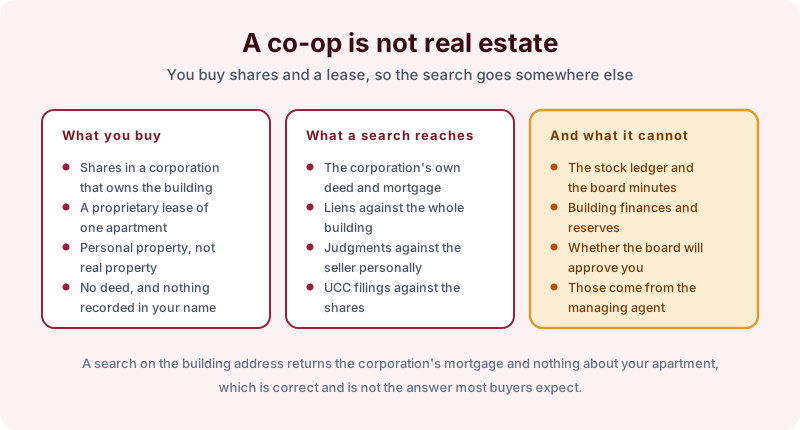
What you are actually buying
Two documents together. A stock certificate for an allocated number of shares, which drives your maintenance charge, and a proprietary lease giving you the right to occupy the apartment and setting out the rules.
There is no deed in your name and nothing recorded at the county naming you as the owner of unit 7C. That is normal and it is the whole reason this search is different from a condo purchase.
Where a search does reach
Three places, and all three matter.
- The building’s own land record. The corporation owns the real estate, so it has a deed, and almost always an underlying mortgage on the whole building. That debt affects every shareholder. Building-wide tax arrears and judgments against the corporation do too.
- UCC filings against the seller. Because the shares are personal property, a loan against them is perfected by a financing statement rather than a mortgage, usually filed at the state. An old filing against a prior owner that was never terminated is the classic co-op defect.
- Judgment dockets against the seller personally. A creditor can reach personal property, so a judgment against the shareholder reaches the shares.
What no public search will tell you
The stock ledger showing who actually holds the shares. The board minutes. The building’s finances and reserves. Any recognition agreement with a lender. And whether the board will approve you, which is a separate ordeal entirely.
All of that comes from the managing agent, at the corporation’s discretion, and a buyer should ask early rather than at the end. That is not a shortfall in the search. It is what the asset is.
One more thing is worth checking early. Some buildings sit on land the corporation does not own, under a long ground lease. A land lease co-op with a rent reset coming is a very different investment from a fee owned one, and the ground lease is recorded, so a search on the building will find it.
What to order
Ask for a search on the building’s address covering the corporation, plus judgment and UCC searches against the seller and every prior shareholder you can identify. Give us the building address and the names, and say it is a co-op so the scope is right from the start.
Then ask the managing agent for the ledger, the financials, the recognition agreement and the house rules. Two sources, because no single one has it all, much like property held in an LLC or trust.
The bottom line
If somebody hands you a clean search on the building and calls it a title search on your apartment, they have answered a different question. The building record is worth having and the lien on the shares is in a different index. Order online, or ask us what a search on that building would cover.