

· AFX Research
Title Search for a Home in a Historic District
Most of what restricts a historic home comes from a city ordinance, which no title search will show you. Some of it is recorded against the property permanently, and that part a search finds.
Table of Contents
Buying in a historic district means accepting that somebody else has a say in what the outside of your house looks like. That is usually understood going in. What is less understood is that the restrictions come from two completely separate places, and a title search reaches only one of them.
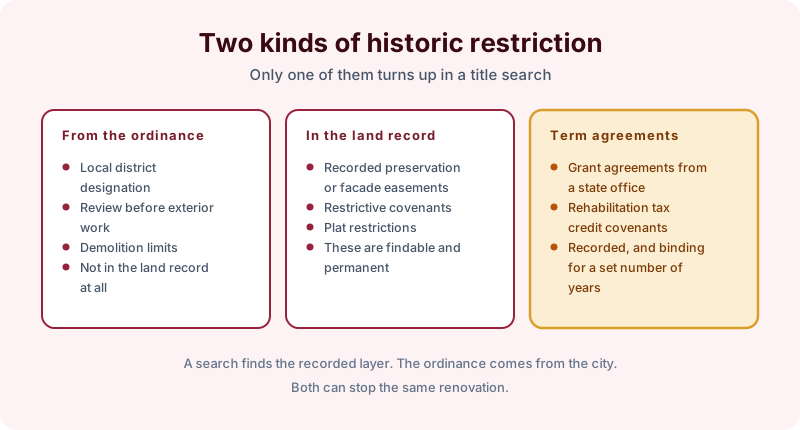
What comes from the city
Local historic district designation is a zoning matter. The city adopts an ordinance, draws a boundary, and requires review before exterior alterations, additions or demolition within it. That is enforced by a commission and it is entirely a creature of the municipal code.
None of it is recorded against individual properties. A title search on a house inside a district returns no indication that the district exists, because there is nothing in the land record to return. The planning department is where that question gets answered.
National Register listing is different again, and frequently misunderstood. Listing on its own does not restrict what a private owner may do with their own money. It becomes consequential where federal funding or permitting is involved, or where it is a condition of a tax credit.
What is recorded
Preservation easements are real property interests and they are recorded. An owner who donated a facade easement to a preservation trust, often for a charitable deduction, has permanently given that trust control over the exterior. It runs with the land and binds every future owner.
Restrictive covenants do the same thing by private agreement. Older subdivisions in historic areas frequently carry them, and they can be stricter than the ordinance.
The third category is a term agreement. State historic offices attach covenants to rehabilitation grants, and federal rehabilitation tax credits carry a recapture period documented by a recorded agreement. These expire, but until they do they bind the owner and can create a liability if the property changes hands or the work is undone.
What this means before you buy
Run both inquiries. The title search tells you what encumbers the deed, in the same way described in deed restrictions and your title search. The city tells you what the ordinance requires.
Then check whether anything was done to the house that should have been reviewed and was not. Unapproved exterior work in a district is an enforcement matter, and it behaves much like the problem in unpermitted additions and your title search.
What to send us
The address, the county and the parcel number, plus the current owner’s name. Tell us if you know the property carries a preservation easement or received a grant, and we will look specifically for the recorded agreement.
The bottom line
A search will find the easements, covenants and grant agreements recorded against a historic property, and it will not tell you the house sits in a district. Ask the city for the second half before you plan any work. Order a search or tell us the address.