

· AFX Research
Title Search Before a Lot Split or Subdivision
Dividing a parcel divides some things and leaves others attached to every piece. What carries across to each new lot, what the deed will not tell you, and the release most people forget to get.
Table of Contents
Splitting a lot looks like a survey and a zoning question, and both of those are real. What surprises people is the title side, because dividing land does not divide most of what is recorded against it. Covenants, easements, and mineral reservations attach to every new piece, and a mortgage attaches to all of them at once.
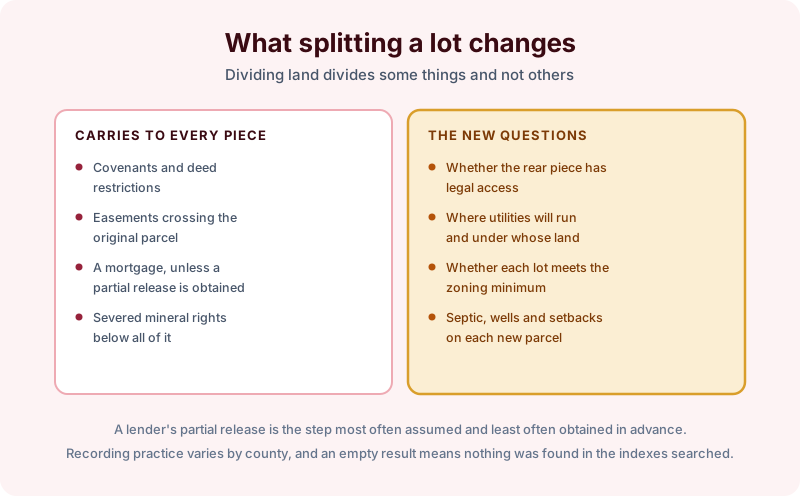
What carries to every piece
- Covenants and deed restrictions. A single family covenant on the original tract binds each new lot. So does an architectural approval requirement, and so does a rental restriction.
- Easements. A utility or drainage easement crossing the parcel now crosses whichever lots it happens to fall on, and a shared driveway easement may serve one and burden another.
- The mortgage. This is the one that stops closings. A lender’s lien covers the whole original parcel, and selling off a piece requires a partial release, which has to be negotiated rather than assumed.
- Severed minerals. If the minerals left the surface estate generations ago, they sit under every new lot, as covered in mineral rights and your title search.
The questions a split creates
Access is the big one. A rear lot cut off from the road needs a legal right to reach it, either a fee strip forming part of the lot or a recorded easement over the front piece. A driveway that has always been there is not a substitute, and that distinction runs through easements and your title search.
Then utilities. Where will water, sewer, and power run to the new lot, across whose land, and has anyone recorded the right to put them there.
Then the municipal side. Whether each new lot meets the zoning minimum, whether setbacks still work, whether a septic field and a well can both fit with the required separation. None of that is in the land record, and all of it comes from the planning and health departments.
Search before you draw the line
The useful order is to search first, draw second. A covenant limiting the tract to one dwelling makes the whole exercise pointless, and finding it before a surveyor and an engineer have been paid is worth the small cost of looking.
Run the chain deep enough to catch old restrictions rather than just the current deed, since these things were frequently written decades ago and are not repeated in later conveyances. A subdivision declaration from the 1950s binds the land just as firmly as one recorded last year, and it will not appear in a two-owner report.
The bottom line
Search the parcel, read the covenants, ask the lender about a partial release early, and settle access on paper before anything is recorded. Recording practice varies by county, and a clean result means nothing was found in the indexes searched rather than that nothing exists. Order online for a certified search of the parcel, or ask us what scope a division calls for first.