

· AFX Research
Easements and Your Title Search: What Gets Reported
An easement gives someone else the right to use part of your property, and most of them are recorded. Here is which ones a title search reports, which ones it cannot, and why a search is not a survey.
Table of Contents
An easement is a right for someone else to use part of your land for a stated purpose: a power line, a shared driveway, a drainage channel, access to the parcel behind yours. The important thing for a buyer is that most easements are recorded, they run with the land, and they do not go away when the property changes hands.
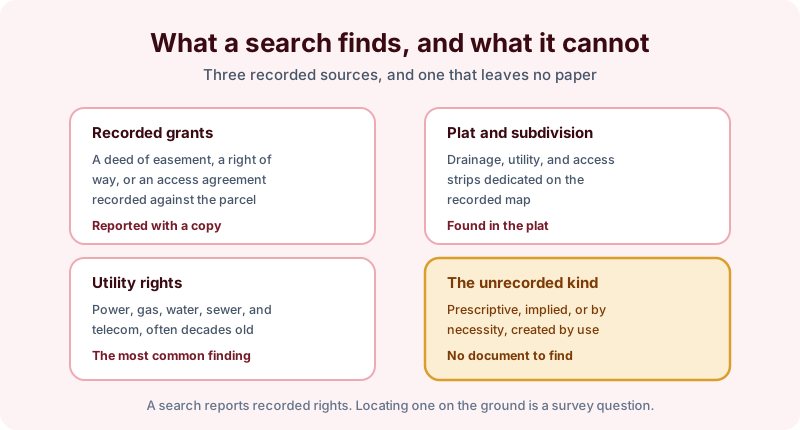
Where they come from
Recorded grants are the cleanest case. A deed of easement, a right of way, or an access agreement recorded against the parcel, naming who benefits and describing the area. A search reports it and supplies a copy.
Plats and subdivisions create many of them. Drainage, utility, and access strips are dedicated on the recorded map when the subdivision is created, which is why the plat belongs in your file alongside the deeds.
Utility rights are the most common finding by volume. Power, gas, water, sewer, and telecom easements are often decades old and written in general terms, sometimes without a precise location.
What the search cannot find
Some easements are created by use rather than by document. A prescriptive easement arises when someone uses part of a property openly for a long enough period; an easement by necessity or by implication can arise when a parcel was split without express access. None of them require a recorded instrument, so none of them are guaranteed to appear in a search, which is one of the items in our note on what a title search cannot find.
The other limit is spatial. A search tells you an easement exists and what the document says about it. It does not tell you where it sits on the ground or whether the shed is inside it, which is survey work rather than records work, and the same distinction our note on property lines covers.
One note on older utility easements. A grant from the 1950s may describe a right to install lines “across the property” without fixing a width or a location, and that vagueness is not something a search can resolve. It is a reason to read the instrument itself.
Why it matters before you buy
Read the actual language, not the summary. An easement that permits a utility to enter and cut vegetation, or one that bars any permanent structure over a described strip, can rule out the addition, the pool, or the fence that made the property attractive in the first place. On raw land the stakes are higher, because access itself may depend on an easement, which is the ground covered in our note on vacant land searches.
It also matters for what you can sell later. An easement that a buyer’s lender or insurer flags is an easement you will be explaining at your own closing, and the time to learn the terms is now rather than then. Sellers who search before listing find these items while there is still room to gather releases.
The takeaway
Ask for the easements with copies attached, and read them against what you plan to do with the property. If the answer matters to your plans, pair the records search with a survey, since the two answer different questions. Order online, compare the report options, or ask us and we will tell you which search covers the easement history you need.