

· AFX Research
Title Search for a Sheriff's Sale Purchase
A sheriff's sale sells whatever interest the debtor had, subject to whatever outranks the judgment being executed. What a title search tells you before you bid, and what the redemption period means for the deed you get.
Table of Contents
A sheriff’s sale is an execution sale. A creditor won a judgment, the debtor did not pay, and the court directed the sheriff to sell real property to satisfy it. What you are buying is whatever interest the debtor actually had, subject to everything that outranks the judgment being executed — and the sale itself tells you almost nothing about either.
It is not the same thing as a foreclosure auction
The two get used interchangeably and they are different animals. A mortgage foreclosure is a lender enforcing its own security interest in the property. An execution sale enforces a money judgment that may have nothing to do with real estate at all, which is how a parcel ends up on the block over an unpaid commercial debt. The research for a mortgage foreclosure sale is covered separately in title search before a foreclosure auction.
What the sale clears, and what it does not
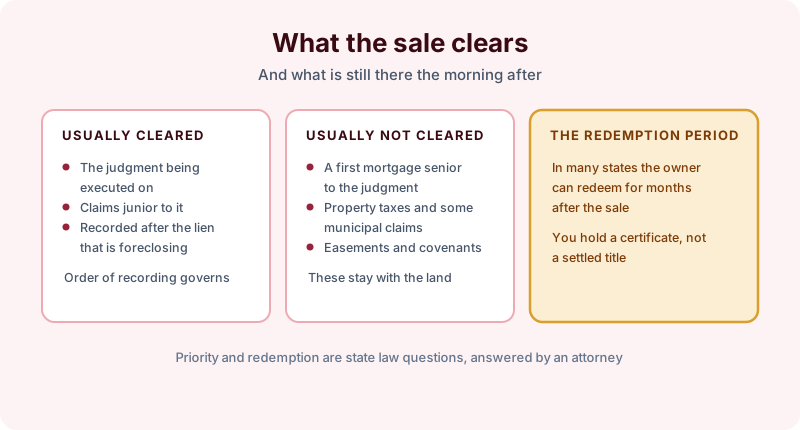
Priority is decided by order of recording, not by who is selling.
- Claims junior to the executing judgment are generally extinguished by the sale.
- A first mortgage recorded before the judgment usually survives. Buy a house for forty thousand dollars at an execution sale and you may have bought a house with a two hundred thousand dollar mortgage still on it.
- Property taxes and certain municipal claims follow their own priority rules and commonly remain.
- Easements, covenants and restrictions stay with the land in the ordinary course.
Working out the order means reading the chain, which is why judgment liens and your title search is the companion piece to this one.
The redemption period
In a good many states the former owner, and sometimes other lienholders, can redeem the property for a fixed period after the sale by paying the bid plus interest. During that window you hold a certificate of sale rather than a settled title, and improvements you make may not be recoverable. Confirm how long it runs in that state before you treat the property as yours.
Order the search before the sale date
Sale lists are published days or weeks ahead, which is usually enough time. A current owner search shows the chain, the open mortgages and the liens found of record, and our turnaround is set out in how long does a title search take.
Bring the case number and the full property description if you have them, because sale notices often identify a parcel loosely, sometimes by street address alone. An address is not a legal description, and on rural or recently split parcels the two can point at different land.
When in doubt
A search reports what has been recorded and found in the county indexes. It does not rank the liens for you, confirm that the sale was properly noticed, or tell you whether the judgment is valid — those are questions for an attorney in that state. Order online, or ask us which search fits the sale you are looking at.