

· AFX Research
Title Search When a Foreclosure Sale Was Set Aside
A court can undo a completed foreclosure sale, and everything the foreclosure recorded stays in the chain afterward. Here is what the record looks like, what has to be confirmed, and why the order matters more than the sale did.
Table of Contents
Foreclosure sales get set aside more often than most buyers realize. A borrower was not properly served, the notice was defective, the price shocked the court, a bankruptcy stay was in place, or the lender and the borrower had a modification in progress that nobody told the trustee about. The sale is undone. What is not undone is the paper trail, and that is what a search of the chain has to make sense of.
What the foreclosure already filed
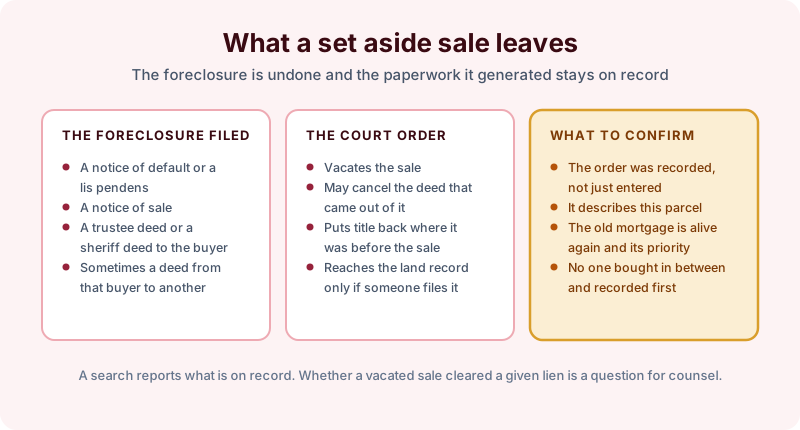
By the time a sale is vacated, the county record usually holds a notice of default or a lis pendens, a notice of sale, and a trustee’s deed or sheriff’s deed into whoever bought at the auction. Sometimes it holds one more deed, from that buyer to a third party who bought the property on afterward, which is where this gets genuinely complicated.
All of those documents stay in the index. They are part of the chain permanently, and a search will report them.
What the court order does
The order vacates the sale, often cancels the deed that came out of it, and puts title back where it was, usually in the former owner’s name with the old mortgage alive again. That is its legal effect. Its effect on the record depends entirely on whether somebody took it to the recorder.
A judge’s order lives in the court file. A land record only knows what is filed with it. An order entered two years ago and never recorded leaves the chain showing a completed foreclosure and a buyer who, on paper, still owns the property.
What has to be confirmed
Four things. That the order was recorded and not merely entered. That it describes this parcel, since orders sometimes describe the case rather than the land. That the old mortgage and its priority are addressed. And whether anyone bought or lent between the sale and the order. This is a close cousin of what a lis pendens does to a chain, and it turns up on exactly the properties people buy at a foreclosure auction.
Why the gap period is the hard part
Between the auction and the order there is a stretch, sometimes months long, in which the foreclosure buyer looked like the owner on every public record there is. People act on that. The buyer may have taken out a loan against the property, sold it to someone who had no idea a motion was pending, leased it, or let a contractor file a lien for work on it.
Vacating the sale does not automatically erase what those third parties did, and in several states a buyer who paid value without notice is protected even though the sale behind them failed. The search surfaces those filings in date order. Which survive is for the court and the state’s recording statute to settle.
When in doubt
A search reports what is on record, with the instruments attached. Whether a vacated sale cleared a particular lien, and what the intervening parties hold, are legal conclusions for an attorney licensed in that state. What the search gives you is the full sequence, dated, so your attorney is not reconstructing it from memory. Order online, or ask us what the chain on a specific address looks like before you bid on it.