

· AFX Research
Title Search When a Property Has Two Parcel Numbers
One house can sit on two assessor parcels, which means two tax bills, two sets of index entries and two searches. Here is why it happens, and the one scenario where it turns into a real problem at closing.
Table of Contents
You pull the tax record on a property and find two parcel numbers where you expected one. This is common, it is usually just history, and it changes how the search has to be run. The time to find out is before a closing, not during one.
Why one property ends up with two
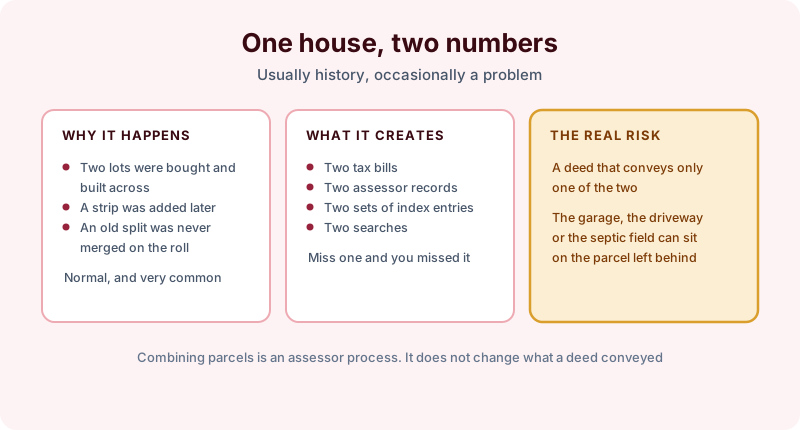
- Two lots, one house. Somebody bought adjoining lots in a subdivision and built across the line. The assessor kept them as separate parcels.
- A strip was added. A neighbor sold off ten feet, or a vacated alley was conveyed in, and it came in with its own number.
- An old split was never cleaned up. The land was divided decades ago, reassembled later, and the roll was never updated to match.
None of that is a defect. It is an artifact of how assessors maintain their records, and the distinction between an assessor’s parcel and a legal description is the one covered in legal description versus property address.
What it changes about the search
Two parcels means two of everything. Two tax bills, two assessor records, and two sets of entries wherever the county indexes against the land. A search run on one number returns a complete and accurate answer about that parcel and tells you nothing about the other.
That is the ordinary failure here. Not a hidden lien, but a search that covered half the property because only half was ordered.
The scenario that actually costs money
A deed that conveys only one of the two.
It happens when a description is copied forward from an older deed that predated the second parcel, or when a closing used the address rather than the full legal description. The result is a seller who still owns a piece of what everyone believed was sold, and the piece is frequently the one with the garage, the driveway or the septic field on it.
Clearing that means a corrective deed and a cooperative seller, which is manageable, or a quiet title action if the seller has died or disappeared, which is not. The related chain problem is described in title search when a deed was never recorded.
What to do about it
Give whoever is running the search every parcel number and the full legal description from the most recent deed, rather than the address. Then compare what the deed describes against what the assessor shows, because that comparison is the whole test.
If you want the parcels merged going forward, that is an application to the assessor and sometimes to the planning department. Worth knowing is that merging them on the tax roll does not retroactively fix what an old deed conveyed.
The bottom line
A search reports what has been recorded and found in the county indexes for the parcels searched, and it is not a complete inventory of everything that could affect title. Give it both numbers and it covers both. Order online with every parcel number you have, or ask us to confirm what the deed actually describes first.