

· AFX Research
Title Search When You Take Title Subject to the Mortgage
Taking title subject to an existing loan is not an assumption, and the record shows it differently. What a search returns on a subject to deal, and the three things worth checking before you sign.
Table of Contents
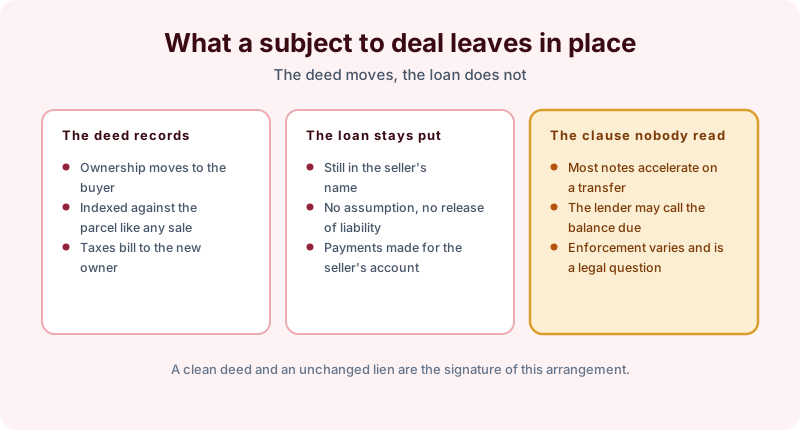
Buying a property subject to the existing mortgage means the deed comes to you and the loan stays in the seller’s name. Nobody assumes anything, the lender is often not asked, and the payments keep arriving under the seller’s account number. It is a real arrangement with real uses, and it leaves a distinctive fingerprint in the county record.
What it is not
It is not an assumption. In an assumption the buyer signs on to the note and the lender usually releases or substitutes the borrower, which produces a recorded assumption agreement. A subject to transfer produces nothing of the kind, which is exactly why it looks ordinary in the index. Our note on title search for an assumable mortgage covers the other path.
What the record will show
- A deed. Normal in form, indexed against the parcel, moving ownership to the buyer.
- A mortgage that never moved. Same lender, same borrower, no release, no modification.
- No assumption agreement. The absence is the signal.
Why the arrangement is used
Three reasons, mostly. A seller needs out of a property faster than a sale and payoff allows. A buyer cannot qualify for financing but can cover the payment. Or the existing loan carries a rate nobody could get today, which is the reason that has come back hardest in the past two years.
None of those are improper. What makes the deals risky is that the person on the hook for the debt and the person holding the title are no longer the same, and the record is the only place that mismatch is visible to anybody else.
The three things to check
- Payoff and standing. The balance, whether payments are current, and whether any notice of default has been recorded. A loan in trouble is a loan the buyer inherits the consequences of.
- Everything junior to it. Second mortgages, judgments against the seller, tax liens and HOA assessments all survive the deed and attach to what you bought.
- The due on sale clause. Almost every note allows the lender to call the balance when ownership transfers. Whether a lender will, and what state law permits, is a question for an attorney rather than a title report.
A two owner search is usually the right scope here, because it picks up the seller’s acquisition as well as the current encumbrances. Our note on two owner search explained sets out what that adds.
What a search cannot settle
A search reports what has been recorded in that county. It does not reveal the loan’s internal status, whether the servicer has noticed the transfer, or whether the lender intends to act. Recording and indexing practice varies county to county, and an empty result is not proof that no claim exists.
The takeaway
Run a current owner search before the deed is signed, not after, and read what sits behind the first mortgage as carefully as the first mortgage itself. Order online and we will return the chain, the liens and the recorded status of each, or ask us what scope the deal needs first.