

· AFX Research
What Happens When Two Deeds Are Recorded the Same Day
Same-day recordings are usually routine closings, but sometimes they are two competing conveyances out of one owner. Here is how a title search tells the difference and why the index line alone is never enough.
Table of Contents
A search comes back with two instruments carrying the same recording date, and the question is immediately which one came first. Most of the time the answer is boring and the documents explain themselves. Occasionally it is the most important thing in the report.
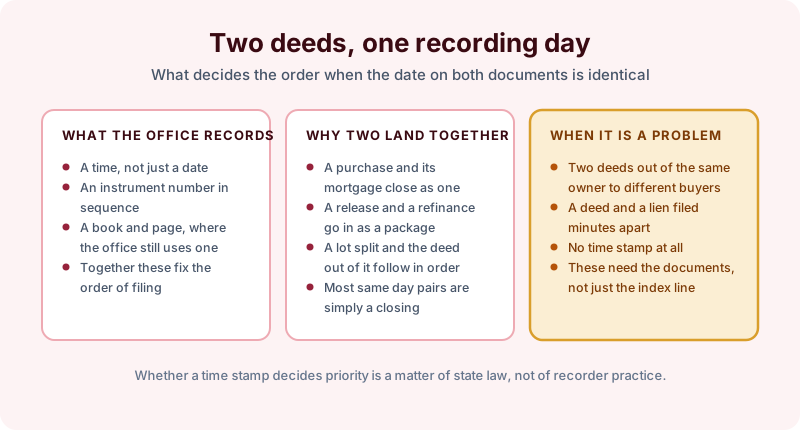
What the recorder actually captures
A recording office does not just stamp a date. It stamps a time, assigns an instrument number in sequence, and in offices that still use them, a book and page. Those three things together fix the order of filing down to the minute, and in most states they are what a court looks at when two claims collide. The date you see on a search summary is a compressed version of a much more precise record.
Why two documents land together
Usually because they are one transaction. A purchase and the mortgage that funded it close as a single event, and the deed has to go in before the mortgage or the lender’s lien attaches to the wrong owner. A payoff release and a new refinance are filed as a package. A lot split and the deed out of the new parcel follow each other in sequence. In each case the order was deliberate, the escrow officer specified it, and the record reflects it.
This is also why a deed of trust and a mortgage often sit right next to each other in the index without anything being wrong.
When it is not routine
Three patterns deserve a closer look. Two deeds out of the same owner to different buyers on the same day. A deed and a judgment or tax lien filed minutes apart, where the order decides whether the lien attached before the property left. And an entry with no time stamp at all, which happens in older records and in some offices even now.
In those cases the index line is not enough. The actual documents have to come out of the record, because the signing dates, the acknowledgment dates and the recitals inside them often tell a clearer story than the filing sequence does. That is the same reason errors found in a title search so often turn out to be visible only in the instrument itself.
What it means for your file
If you are buying, a same-day pair in the chain is worth asking about but almost never fatal. If you are closing, it is a reminder that recording order is something your settlement agent controls and should be instructed on. And if two conveyances really are competing, which one prevails is decided by state law and by a court, not by the recorder and not by the abstractor.
The bottom line
A same-day recording is a question, not a defect, and the answer is usually in the documents rather than the index. We pull them and report what they show. Order online when you want the chain read in detail, or ask us if you have a specific pair you want looked at first.