

· AFX Research
Title Search Before Adding a Pool or Outbuilding
The permit office checks the zoning code, and the zoning code says nothing about the easement running through your back yard. Here are the three recorded limits that stop a project late, and how to find them first.
Table of Contents
A homeowner gets a permit for a pool, pays a deposit, and a week before excavation the utility tells them the rear ten feet is a sewer easement and nothing can go on it. The permit was valid. It just answered a different question, because a building department checks the zoning code, and none of the three things most likely to block a back yard project lives in the zoning code.
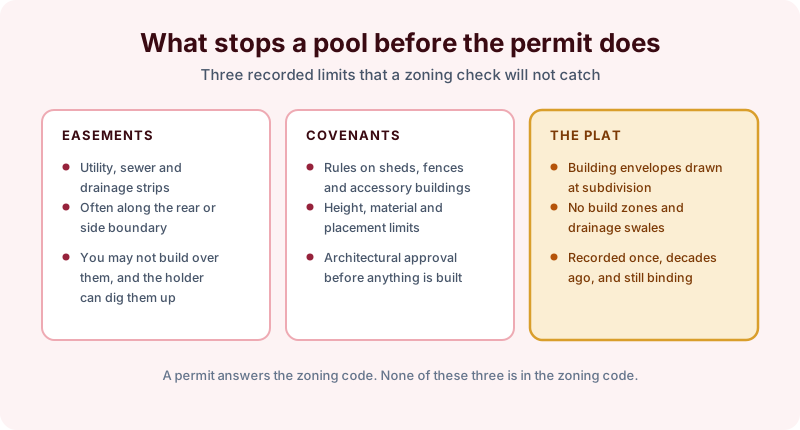
Easements across the yard
Utility, sewer and drainage easements usually run along a rear or side boundary, which is exactly where people put pools, sheds and garages. You generally cannot build over one, and the holder keeps the right to come in and dig it up, so even a structure somebody lets you build sits on borrowed time.
These are recorded against the parcel and a search finds them. What a search will not tell you is precisely where the strip falls on the ground, which is a survey question and the reason the two documents belong together. A ten foot easement described from a line nobody has located is not a usable constraint on its own.
Covenants on what you may build
If the house is in a subdivision, a recorded declaration very likely has opinions about accessory structures. Height, materials, placement, fence style, and whether an architectural committee has to approve the plans before anything starts.
Those covenants bind the land regardless of whether an association is still active or anyone has enforced them lately, which is the same mechanic described in deed restrictions and your title search. A dormant association can wake up when a neighbor complains, and in many states an individual lot owner can enforce the covenants even if no association exists at all.
The plat nobody reads
The subdivision plat is the third source and the most overlooked. Plats routinely show building envelopes, no-build zones, drainage swales and setbacks that are stricter than the current zoning. It was recorded once, decades ago, and it still governs. Nobody hands it to a buyer at closing and nobody mentions it at the permit counter.
This is also where a project runs into the boundary itself. If you are planning anything near a line, read our note on whether a title search shows property lines before assuming the fence marks it.
What to do before you spend
Order a search on the parcel and read the easements, the declaration and the plat together. Then get a survey if the project goes anywhere near a boundary or an easement strip, because the record tells you a right exists and only a survey tells you where.
Doing both costs a fraction of moving a pool, and it is the same sequence a buyer should follow before building an ADU.
The bottom line
The permit is not the clearance. Order online and we will run the parcel and attach the easements, covenants and plat we find, or ask us what a search of that scope would cover before you order.