

· AFX Research
Title Search Before Transferring Your Home Into a Trust
Deeding your house into a living trust does not clear anything off the record. It copies the existing title, errors included, into a new name. Here is what to confirm before the deed is drafted, and what the trust cannot fix.
Table of Contents
Putting the family home into a revocable living trust is one of the most common estate planning steps there is, and it is usually handled with a single deed. That deed copies the title you already have, which means it copies the problems too. Thirty minutes of record checking before it is drafted is worth considerably more than a correction deed afterwards.
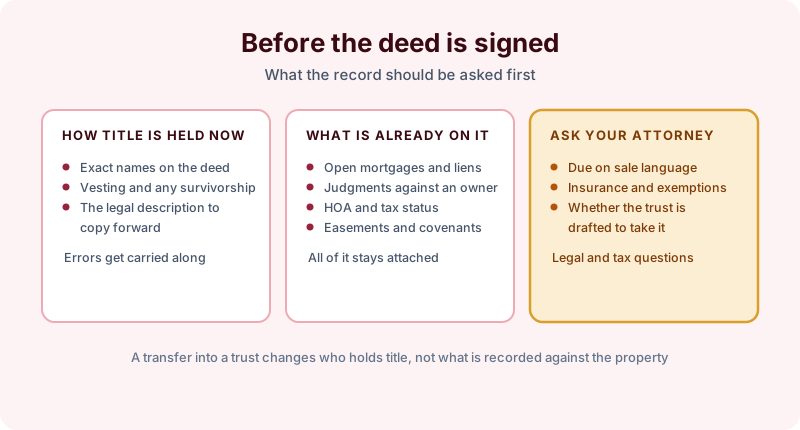
Start with how title is held today
The new deed has to describe the grantors exactly as the last deed named them. A middle initial that appeared in 1998 and vanished in 2004, a maiden name, a spouse added or removed along the way — all of it matters, because a chain with a name that does not match creates a question somebody has to answer at the next sale.
The legal description gets copied forward too. If it was wrong, it stays wrong, which is the problem described in legal description versus property address.
Find out what is already attached
A transfer into a trust changes who holds title. It does not remove anything recorded against the property.
- Open mortgages and home equity lines. These follow the land regardless of the deed.
- Judgment liens against an owner. A judgment indexed against you attaches to real property you own in that county, and the trust transfer does not shake it loose.
- Unreleased old liens. A paid debt with no recorded release looks exactly like an unpaid one, and it will surface when the trustee eventually sells.
- HOA assessments and tax status. Both continue, and some HOA documents require notice of a transfer.
Watch for the pieces people forget
Two items account for most of the surprises. The first is a transfer on death deed or beneficiary deed recorded earlier, which may conflict with what the trust is meant to accomplish — those are covered in transfer on death deeds and your title search.
The second is a parcel that is not actually one parcel. Where the lot was split, or where a strip was added years ago, a deed naming only the main description can leave a sliver outside the trust.
What the search will not answer
Whether the transfer triggers a due on sale clause, how it affects your homeowner’s insurance or a homestead exemption, and whether the trust is drafted to receive the property are legal and tax questions. Those belong to the attorney preparing the documents, not to a records search, and the same division applies when property is already held in an entity, as title search for property owned by an LLC or trust explains.
The bottom line
A search reports what has been recorded and found in the county indexes, and it is not a complete inventory of everything that could affect title. What it does well is show you exactly what the new deed is about to carry forward. Order online before the deed is drafted, or ask us what scope fits your situation.