

· AFX Research
Title Search for a Property You Already Own
Most people order a title search when they are buying. Owners order one too, and usually for a specific reason, from confirming an old mortgage was actually released to checking what has been recorded against the house since.
Table of Contents
Title searches are associated with buying, which is why owners rarely think of ordering one. The record against your property keeps changing after you close, and nobody tells you when it does. There are a handful of moments where looking is worth the modest cost.
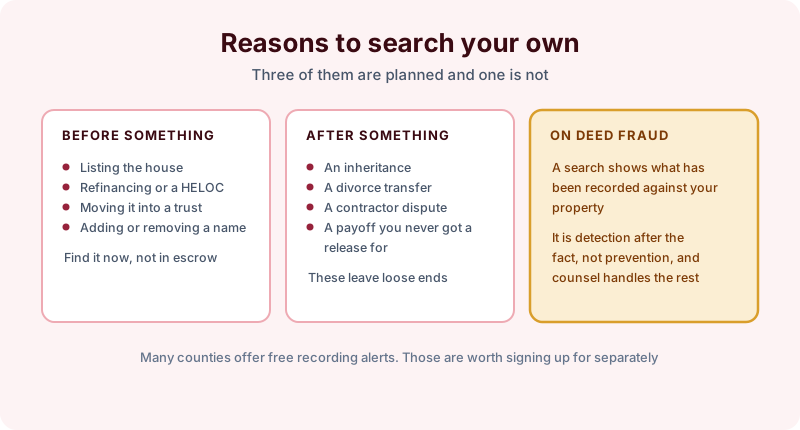
Before you do something with the house
- Listing it. Finding an unreleased lien in week one is a chore. Finding it eleven days before closing is a crisis, and the buyer’s title company will find it. Title search before listing your home covers what to expect.
- Refinancing or opening a line of credit. Underwriting will order its own search. Knowing what it will say is a reasonable advantage.
- Estate planning. Moving the house into a trust copies the existing title, errors included.
- Adding or removing a name. Same principle, and it is easy to get wrong.
After something has already happened
Some events leave loose ends in the record that nobody circles back to.
An inherited property may still show a deceased owner, or a mortgage from decades ago with no recorded satisfaction. A divorce transfer may have been ordered by a decree and never carried out by a deed. A contractor dispute can leave a recorded claim that was settled privately and never released. A loan you paid off in full can sit open in the index forever if the servicer never recorded the release, which is the situation described in how to check if a mortgage was paid off.
None of those announce themselves. They wait until you try to sell.
What it costs you to find out late
The asymmetry is the whole argument. An unreleased mortgage found while you are thinking about selling is a phone call to a servicer and a few weeks of patience. The same unreleased mortgage found after you have accepted an offer is a delayed closing, a nervous buyer, and sometimes a renegotiated price.
Nothing about the defect changed. Only the deadline did.
What about deed fraud
This is the reason owners most often ask about, and it deserves a straight answer.
A search tells you what has been recorded against your property as of the day it was run. If a fraudulent deed or a forged lien has been filed, a search finds it. What a search cannot do is stop one from being filed, so it is detection rather than prevention, and what to do next is a question for an attorney. Title search before a quiet title action covers the route that usually follows.
Many county recorders now offer free alerts that email you whenever a document is recorded against your name or parcel. Those are worth signing up for separately and they cost nothing.
The bottom line
A search reports what has been recorded and found in the county indexes, and it is not a complete inventory of everything that could affect your title. What it does well is tell you today what a buyer’s title company would tell you in escrow. Order online, or ask us which search fits what you are trying to confirm.