

· AFX Research
Title Search for a Reverse Mortgage
A reverse mortgage has to record in first position, which means everything ahead of it must be cleared and every owner must sign. Here is what the search needs to establish before the file gets that far.
A reverse mortgage is underwritten against the house rather than against income, and the lender takes its security in first position. That makes the title record, not the borrower’s credit file, the thing most likely to stop the loan. These files also involve older properties with longer histories, and long-held homes accumulate paperwork, which is where the interesting problems live.
What has to be cleared
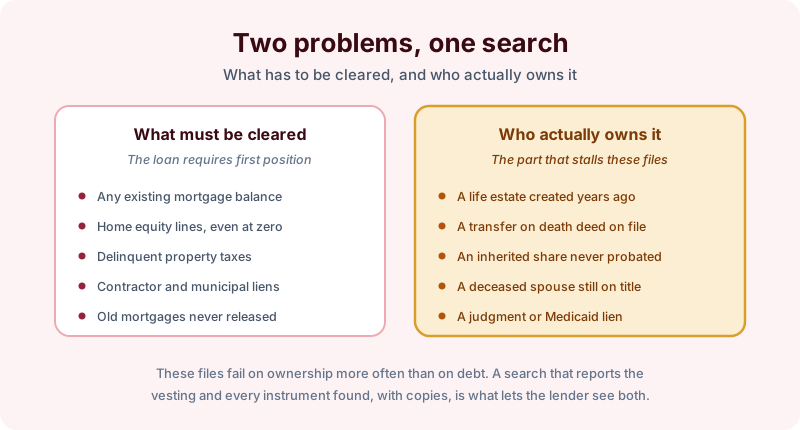
Everything ahead of the new lien has to go, and the list is longer than most borrowers expect, running from the existing mortgage balance, a home equity line even if it is sitting at zero, delinquent property taxes, contractor liens, and municipal charges. Old mortgages that were paid off decades ago but never released also show up here, and they take real time to cure — the lender who was paid may no longer exist. Our note on how to check if a mortgage was paid off covers what that cure looks like.
Who actually owns it
This is where these files stall. A long-held home has often accumulated estate planning that nobody thought of as a title change.
A life estate. A parent deeded the remainder to the children years ago and kept a life estate. The parent no longer owns the full fee, and the remaindermen have an interest in the property.
A transfer on death deed. Recorded and often forgotten. The effect during the owner’s lifetime varies by state, so the lender’s counsel needs to see the document.
An unprobated inheritance. A spouse or co-owner died and nothing was ever filed, so the record still shows someone who cannot sign.
A lien against one owner. A judgment or a Medicaid estate recovery lien recorded against a person attaches to their interest in the property, and it travels with that interest into the new loan. The related search question is covered in judgment liens and your title search.
Order it early
The cures here are slow. Reopening an estate, obtaining a release from a defunct lender, or getting a remainderman to join the loan takes weeks, and none of it can start until somebody knows the problem exists. A borrower in their eighties waiting on a probate court is the outcome nobody wants, and it is entirely avoidable by looking sooner. Ordering the search at application rather than at underwriting is what converts a delay into a scheduling item, and a search of the current record takes under a day, as our note on how long a title search takes explains.
The bottom line
The search should report the current vesting, every lien found of record, and copies of the instruments, so the lender can see who must sign and what must be paid. Bear in mind what any search reports is what was recorded and indexed — an unrecorded agreement leaves no trace, which is the theme of what a title search cannot find. Order online, or ask us to scope it to the property and the owners named on the application.